Wig Textures Explained: Body Wave vs Deep Wave vs Water Wave (and Which Suits You)
Every wig texture decoded in plain language — straight, yaki, loose wave, body wave, water wave, deep wave, curly, kinky and finger coil — with real maintenance needs, volume ratings and the specific wigs that nail each pattern.
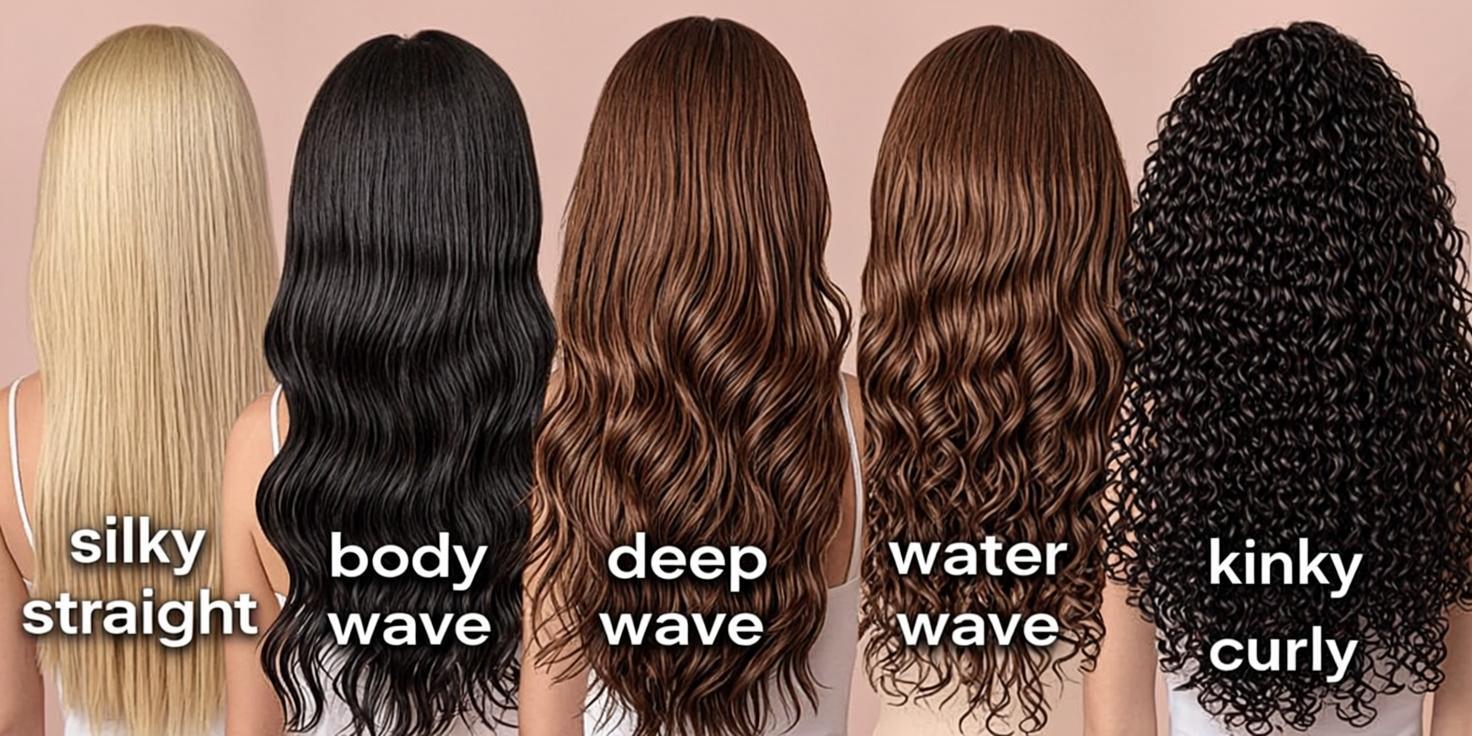
Body wave, deep wave, water wave, loose wave, kinky, yaki, finger coil — wig listings read like a waveform dictionary, and almost nobody explains the differences. That matters because texture is the second-most-important buying decision after fiber type. The wrong texture doesn't look bad; it looks off — like hair that belongs to somebody else's head. The right one reads custom-made, even on a $40 synthetic.
This guide translates every common wig texture into plain language: what the pattern actually looks like, how it moves, how much maintenance it demands, who it flatters, and what it costs to keep it looking new. We'll also point you to the specific wigs in our catalog that best represent each texture — including the new arrivals we just tested.
Why Texture Matters More Than You Think
Fiber determines what your wig is made of. Texture determines what your wig does — how it frames your face, how it moves when you walk, how it photographs, and how much work it asks of you every morning. Two wigs can share the same length, density and lace type and still look like they cost $80 apart, purely because of how the pattern sits.
Texture also controls two hidden costs. First, refresh time: tight curl patterns need daily water-and-mousse maintenance, while straight and loose-wave textures survive on a weekly brush. Second, longevity risk: the tighter the texture, the faster the hair tangles at the nape, where friction is constant. A body wave can last two years of regular wear; a finger coil of the same quality might give you eighteen months. Neither is a reason to avoid the other — but you should buy knowing the deal.
One more thing listing photos won't tell you: texture loosens with length. Gravity stretches any wave pattern as the hair gets longer, so a 30-inch "deep wave" lands closer to a loose wave by the time it reaches your waist. If you're shopping long and you want the pattern to stay defined, size the texture one step tighter than you think you want.
Straight and Yaki Straight: The Baselines
Straight is exactly what it promises — no pattern to maintain, maximum shine, the easiest wig to brush and the hardest to hide flaws in. Straight hair is a mirror: every tangle, every frizz halo, every thin end is on display. That's why density matters most in this category (aim for 180% or higher past 24 inches) and why straight wigs reward nightly wrapping more than any other texture.
Yaki straight is straight hair with memory of texture — it mimics relaxed or pressed hair, with a slight roughness that adds body and grip. Where silky straight slips through your fingers like water, yaki stacks, holds volume, and blends invisibly with relaxed natural hair. If your own edges are relaxed or texturized, yaki is the texture your leave-out has been waiting for.
For pure sleek length at a fair price, Hofun's 30-inch straight with a 13x6 HD front and 180 density is the new benchmark in our catalog:
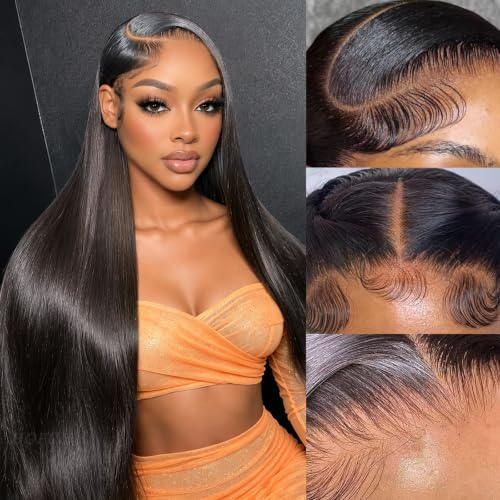
Waist-length straight hair at 180 density with a 13x6 HD front — 4.1 stars from 500+ buyers.
Body Wave: The Crowd-Pleaser
Body wave is the S-shaped pattern everyone can wear — loose, soft, and stretched enough that it moves like straight hair with a pulse. It adds volume without adding width, photographs beautifully from every angle, and survives being slept on (wrapped) better than any curl. If you're buying your first human-hair wig and feeling overwhelmed by texture charts, body wave is the answer that is almost never wrong.
The trade-off is personality. Body wave is the beige of textures: safe, flattering, and everywhere. If you want your hair to be the outfit, a body wave needs styling — flexi-rods, a wand, a braid-out — to become the feature. It also loosens noticeably between washes, so expect the day-three version to read closer to loose wave.
The best-value body wave we carry right now is the 200-density 13x4 that comes in under fifty dollars — real human hair, honest specs:

The category's price floor for real human hair: $46.99, 200 density, 1,800+ ratings.
For maximum drama, the 250-density 28-inch body wave keeps fullness all the way to the ends — the density upgrade that makes long body wave look expensive instead of stringy:
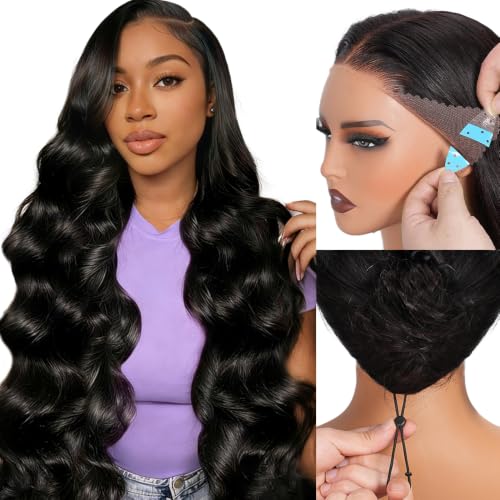
250 density at 28 inches — the maximum-fullness body wave, with a drawstring for security.
Loose Wave: Body Wave's Softer Sibling
Loose wave sits one notch looser than body wave — waves that are more suggestion than pattern. It's the texture of expensive blowouts: movement, minimal definition, ends that flip where they want. Loose wave is what body wave becomes on day three, sold as a deliberate look, and it's having a moment precisely because it reads undone rather than styled.
Practically, loose wave is the lowest-maintenance textured option on the market. It brushes out to near-straight, bounces back with water and a scrunch, and tangles least among the wave family because the pattern is so open. Sunber's 16-inch loose body wave with honey-blonde highlights and curtain bangs is a textbook example — color, cut and texture all pulling in the same low-effort direction:
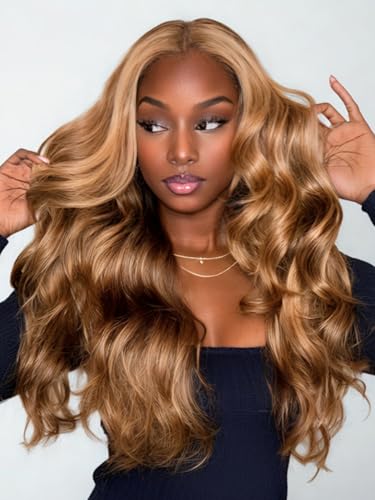
Honey-blonde highlights with curtain bangs on a pre-cut 7x5 — 4.5 stars from early buyers.
Water Wave: The Wet-Look Classic
Water wave is tighter than body wave, looser than deep wave — a bouncy, high-definition wave that looks like hair that air-dried from soaking wet. It's the pattern of classic "wash-and-go" glamour: shine, spring, and a ripple that catches light from root to end. On 14–18 inch lengths it reads youthful and effortless; past 22 inches the weight starts pulling the pattern open, so buy dense.
Water wave's personality is bounce — it moves when you move, which makes it the best dance-floor texture and the worst under a heavy winter coat. Maintenance sits in the middle: a nightly satin wrap keeps the pattern set, and a water-bottle refresh in the morning restores the ripple in thirty seconds.
The new black-cherry water wave from KLAIYI (pre-cut lace, anti-slip band) shows the texture in its ideal color — the wine-red shimmer catches the wave pattern beautifully:
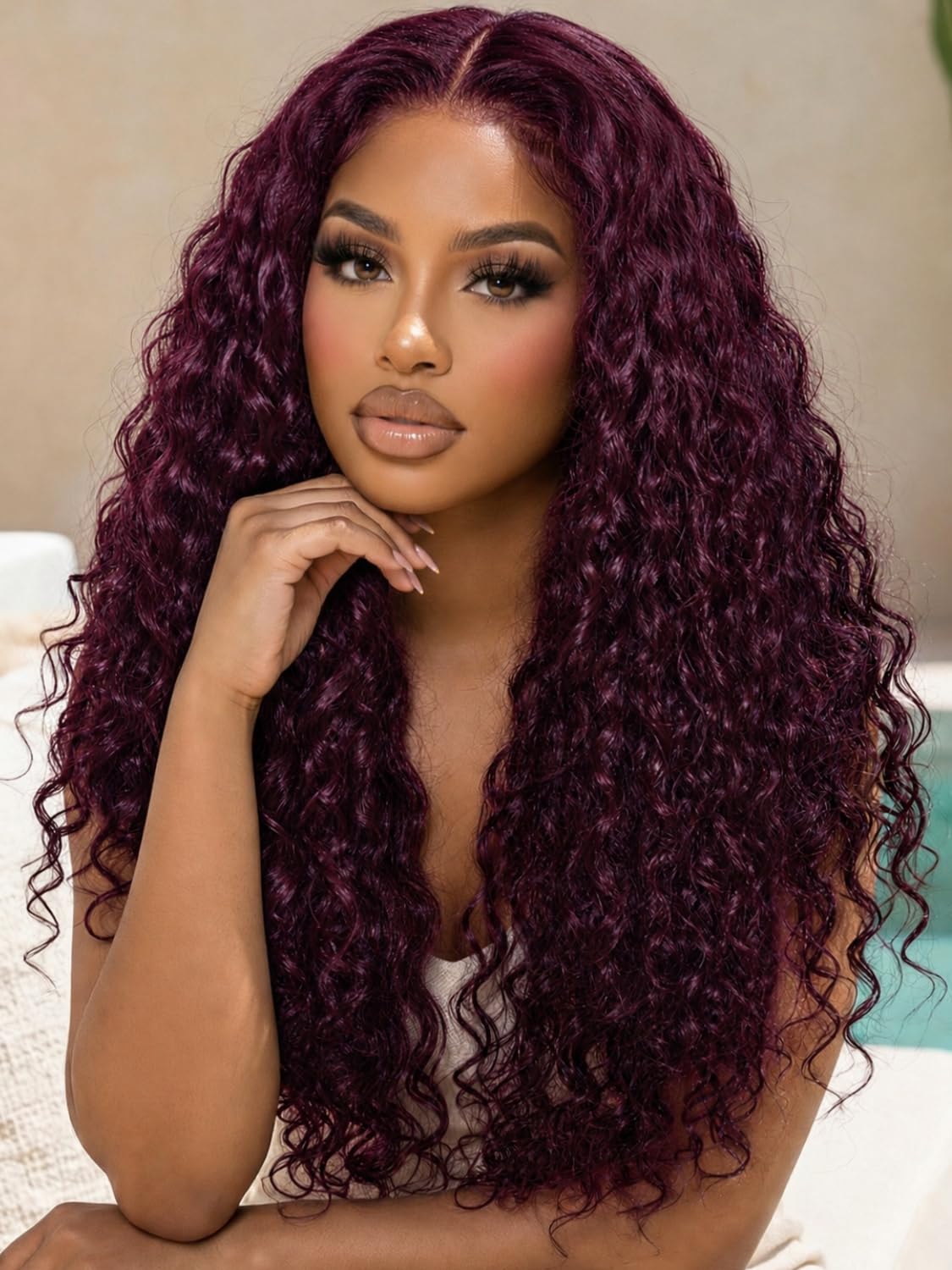
Black-cherry water wave with the 'Bye Bye Slip' anti-slip band — color and security in one.
Deep Wave: Defined, Dense, Dramatic
Deep wave is the tightest of the wave family — compact, uniform S-waves that stack like corrugated glass. This is the texture people mean when they say "expensive curls": definition that holds all day, volume that doubles the hair's visual mass, and a pattern that reads deliberate from across a room. Deep wave is also the highest-maintenance wave — it needs water, mousse and a satin wrap nightly, or the pattern frizzes into its own texture.
Deep wave rewards density like no other texture. At 180% it looks full; at 200%+ it looks like a hair campaign. The new 18-inch deep wave at 200 density, under sixty dollars, is the strongest budget entry we've tested:
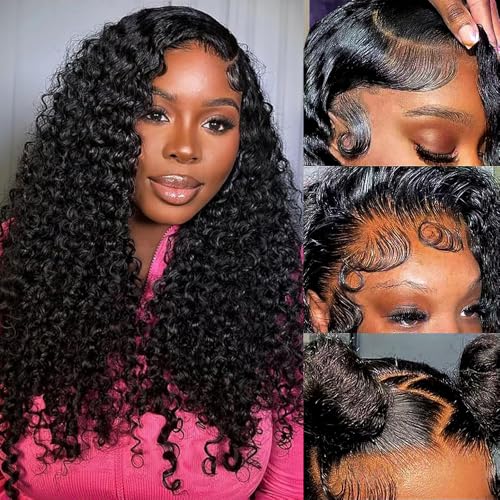
Defined deep wave under $60 — 200 density, 13x4 HD lace, 4.3 stars.
MEGALOOK's 220% "loose deep wave" splits the difference between deep and water wave — the pattern stays defined but gains movement, and the density is the story:
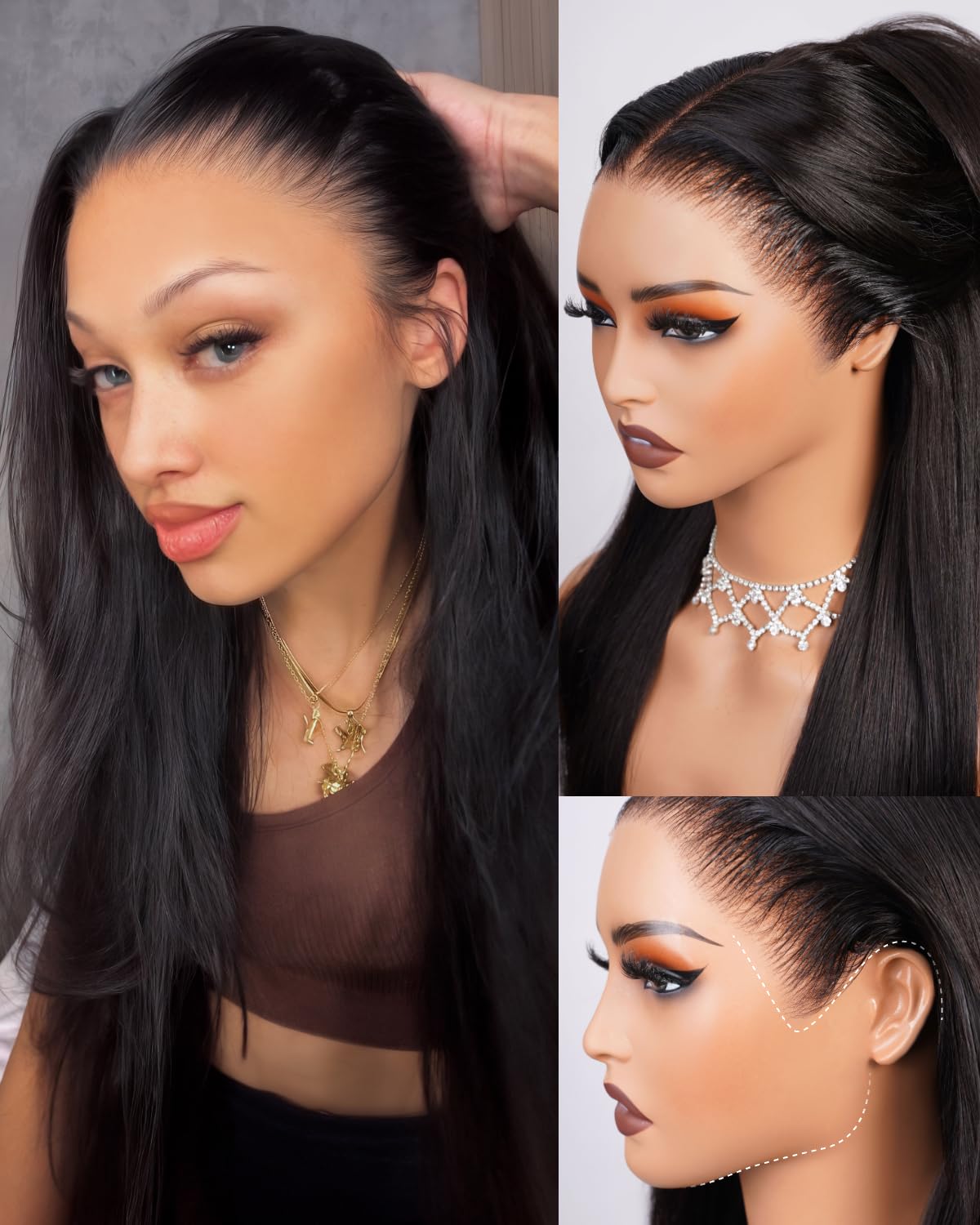
220% density loose deep wave with the full pre-everything treatment — 4.4-star early trend.
Curly: The Volume Engine
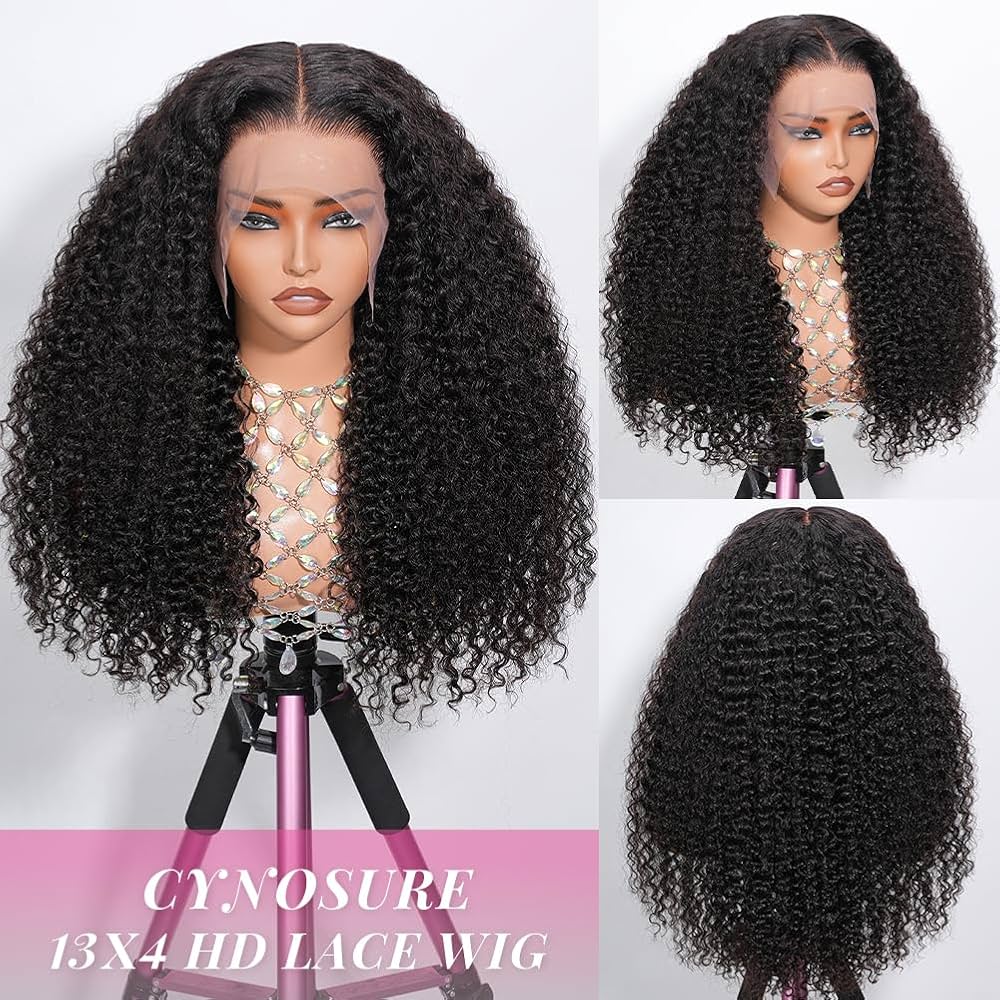
Curly covers everything tighter than deep wave — spirals, ringlets and Z-patterns with real dimension. Curly texture multiplies volume: the same ounce of hair in a curly pattern takes up twice the visual space, which is why curly wigs read big even at modest lengths and modest density. Curly also shrinks — a "20 inch" curly wig can wear like 14 — so buy longer than the look you want.
Maintenance is real: curly textures want moisture (leave-in conditioner is not optional), detangling from the ends up, and a satin wrap or pineappling at night. In exchange, curly hair is the most forgiving on camera — the pattern hides frizz, flyaways and imperfect hairlines better than any other texture.
Kinky and Afro Textures: Natural, Matched, Beautiful
Kinky textures mimic coily natural hair — 4A to 4C patterns that range from tight S-coils to Z-shaped zigzags. The reason to choose kinky isn't fashion, it's matching: if your leave-out or bio hair is natural, a silky straight wig announces itself at the hairline, while a kinky texture blends so seamlessly people will assume it grew there. Kinky textures also shrink dramatically and eat density for breakfast — the same ounce of hair that looks full in body wave looks modest in kinky curl.
LUVME's kinky loose body wave is the gentlest on-ramp: the pattern is looser than 4C, full of movement, and at 4.5 stars across 3,900+ ratings it's one of the best-reviewed human-hair wigs on Amazon, full stop:
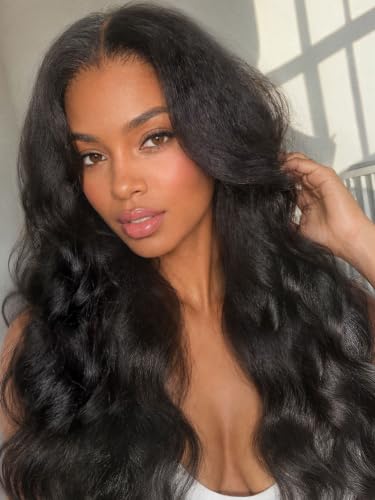
Kinky loose body wave at 4.5 stars across 3,900+ ratings — the natural-texture benchmark.
For a true natural coil, the finger-coil texture is the tightest pattern we carry — coils so defined they look freshly twisted:

True finger-coil texture — the tightest curl pattern we carry, 4.8 stars from early buyers.
The Texture Cheat Sheet
| Texture | Pattern look | Maintenance | Volume | Best for |
|---|---|---|---|---|
| Silky straight | Flat, glossy | Low (brush + wrap) | Low | Sleek styles, ponytails |
| Yaki straight | Straight with body | Low | Medium | Blending relaxed hair |
| Loose wave | Barely-there S | Low | Medium | Undone, effortless looks |
| Body wave | Soft, open S | Low-medium | Medium | First wigs, everyone |
| Water wave | Defined, bouncy ripple | Medium | Medium-high | Movement, shine |
| Deep wave | Tight, uniform S | High (water + mousse) | High | Statement curls |
| Curly | Spiral / ringlet | High | High | Volume, camera-ready |
| Kinky / coil | Tight S or Z coils | High (moisture) | Highest | Matching natural hair |
How to Choose in Sixty Seconds
Answer three questions. What does your morning look like? If it's ten minutes maximum, stay at loose wave or straight; if you enjoy a styling ritual, the curl family rewards you. What does your bio hair do? If you're blending leave-out, match your texture honestly — yaki for relaxed hair, kinky for natural hair. What's the occasion profile? Everyday wear favors low-maintenance textures; events and photos forgive (and reward) high-definition patterns like deep wave and finger coil.
Then buy one notch more texture than feels safe. In our testing and reader feedback, the most common regret isn't "too much texture" — it's playing it safe with body wave and missing the personality. Hair is the one accessory you can change monthly; texture is the cheapest way to make the change dramatic.
Q: What's the difference between body wave and loose wave?
Body wave is the tighter of the two, with a visible S-pattern from root to end. Loose wave is one notch looser — more movement, less definition. Body wave holds its pattern longer between washes; loose wave reads more "undone" and requires even less styling. If you're deciding between them for a first wig, body wave is the safer choice, and loose wave is the more fashionable one this year.
Q: Does water wave hair get frizzy?
All textured hair frizzes at the edges eventually — water wave just does it gracefully, loosening into a loose wave rather than a halo. The fix is the standard curl routine: a light water-and-leave-in spray in the morning, and a satin bonnet at night. Avoid brushing dry water wave hair; scrunch it back to life with damp hands instead.
Q: Which wig texture lasts the longest?
Straight and body wave, comfortably. Their open patterns create the least friction at the nape, which is where wigs actually die. Tighter textures (deep wave, kinky, finger coil) tangle faster at the neck and need more careful detangling — with good care they still last 12–18 months of regular wear, versus 18–24+ for looser patterns.
Q: Can I straighten a curly or deep wave wig?
If it's human hair, yes — a flat iron on low-to-medium heat will temporarily straighten any pattern, and it reverts with a wash. Do it sparingly: repeated heat loosens the factory pattern permanently, which is how "deep wave" wigs quietly become body waves. Synthetic curly wigs generally cannot be straightened unless the fiber is specifically heat-friendly, and even then only at low temperatures.
Q: What texture is best for beginners?
Loose wave or body wave on a glueless cap. Both forgive everything: missed styling days, rough handling, imperfect storage. Deep wave looks incredible but will punish a skipped satin wrap with a morning of detangling — learn the habits on something easy first.
Q: Why does my deep wave wig look flat at the top?
Density and the pattern's weight distribution. Deep wave hair is heavy per strand, and gravity pulls the definition down through the day. The quick fix is lifting at the roots with a wide-tooth pick (never a brush) and a water-mousse refresh; the permanent fix is buying 200%+ density, which holds pattern from root to end.
Comments
Recommended in this guide
Best ValueHuman HairThe category's price floor for real human hair: $46.99, 200 density, 1,800+ ratings.
Top RatedHuman HairKinky loose body wave at 4.5 stars across 3,900+ ratings — the natural-texture benchmark.
Human HairWaist-length straight hair at 180 density with a 13x6 HD front — 4.1 stars from 500+ buyers.
Human Hair250 density at 28 inches — the maximum-fullness body wave, with a drawstring for security.
Budget PickHuman HairDefined deep wave under $60 — 200 density, 13x4 HD lace, 4.3 stars.
Human HairHoney-blonde highlights with curtain bangs on a pre-cut 7x5 — 4.5 stars from early buyers.
Human Hair220% density loose deep wave with the full pre-everything treatment — 4.4-star early trend.
Color PickHuman HairBlack-cherry water wave with the 'Bye Bye Slip' anti-slip band — color and security in one.
Top RatedHuman HairTrue finger-coil texture — the tightest curl pattern we carry, 4.8 stars from early buyers.
Related guides
The 100 Best Wigs of 2026, Ranked by 213,370 Real Customer Reviews
We analyzed 213,370 verified Amazon reviews to rank the 100 best wigs of 2026 — from $10 synthetics to 220-density human hair. Every pick, every price, every con.
Human Hair vs Synthetic Wigs: The Honest Comparison (2026 Update)
The single biggest wig decision you'll make, broken down with real 2026 prices: what each fiber does best, where it fails, and exactly who should buy which.
Curly vs Straight Wigs: How to Choose Your Texture
Texture changes everything about a wig — how it frames your face, how long your mornings take, and how the wig ages. Here's how to pick between curly and straight for real.