How to Measure Your Head for a Wig: The Complete Cap Size Guide
Five minutes with a soft tape saves a bad wig day: the four measurements that determine wig fit, the size chart in plain inches, what to do between sizes, and the caps that solve each fit problem.

The most expensive mistake in wig-buying isn't choosing the wrong color or the wrong fiber — it's choosing the wrong cap size. A wig that's too big slides, lifts at the nape, and forces you into glue you never needed. A wig that's too small gives you a headache by lunch and a hairline that looks stretched. And the cruel part: almost nobody knows their own measurements, because "average" is the only size most stores mention.
Here's the industry's open secret: the "average" cap fits 22.5 inches around, and a huge share of women don't measure 22.5 inches around. If your wig has ever felt loose or tight "for no reason," the reason is arithmetic. This guide shows you exactly how to measure your head in five minutes with a soft tape, how to read the results against standard wig sizing, and what to do when you land between sizes — including the specific wigs that solve each fit problem.
What You Need
A soft measuring tape (the kind in sewing kits — a piece of string plus a ruler works too), a mirror, and hair flattened as close to your head as possible. If you have long or thick bio hair, put it in flat cornrows or a snug wig cap before measuring — you're measuring the head the wig will sit on, and every extra millimeter of bump translates to a looser fit.
Measure snug but not tight. The tape should touch skin all the way around without pressing in — a wig cap grips, and your measurement should reflect that grip, not a tourniquet.
The Four Measurements That Matter
1. Circumference (the number that sizes the wig)
Circumference is the big one — the measurement that maps directly to small / average / large cap sizes. Place the tape at your front hairline, just where your hair meets your forehead. Run it back above your ears, around the widest point at the back of your head (the occipital bone — feel for the bump), and back to the starting point. Keep the tape in one flat loop the whole way.
This number is your cap size:
| Circumference | Wig cap size | What it means |
|---|---|---|
| 21" – 21.5" | Petite / Small | Most wigs will swim on you |
| 21.5" – 22" | Small-to-Average | Borderline — adjustable straps save you |
| 22" – 22.5" | Average | The size 90% of wigs are built on |
| 22.5" – 23" | Average-to-Large | Adjustable straps at maximum |
| 23"+ | Large | Look for large-cap or 360 lace styles |
2. Front to Nape (the number that kills headbands and bangs)
Measure from the center of your front hairline straight back over the crown to the prominent bone at the base of your skull where a wig's nape edge sits. Average runs 14 to 14.5 inches. Shorter than 13.5 and caps with deep lace fronts can press on your forehead; longer than 15 and the nape may not reach your natural hairline, leaving a gap that no styling hides.
3. Ear to Ear (Across the Hairline)
Start the tape at your front hairline directly above one ear, arc it over the crown — not over the top of your head, along the hairline path — and end above the other ear. Average is about 11.5 to 12 inches. This measurement determines how the cap's ear tabs sit, which matters most on styles with lace fronts: tabs that sit too high stretch the lace; tabs too low crowd your ears.
4. Temple to Temple (Around the Back)
From your temple (the dent just outside your eye), around the back of your head at hairline level, to the other temple. Average runs 14.5 to 15 inches. This is the measurement that predicts nape lift — the number-one complaint on glueless wigs. If your temple-to-temple runs large, prioritize caps with adjustable straps and combs at the back, or the newer anti-slip band designs.
Reading Your Numbers Like a Fitter
A cap fits when circumference matches and the secondary measurements don't fight it. The common real-world patterns:
Small circumference (under 22"), everything else average. You're who "petite" caps exist for, and your best friends are small-cap constructions and four-comb designs. The rare 21.5-inch small cap on a 360 lace base solves your problem completely — real parting space, ponytail-capable, and it actually stays put:
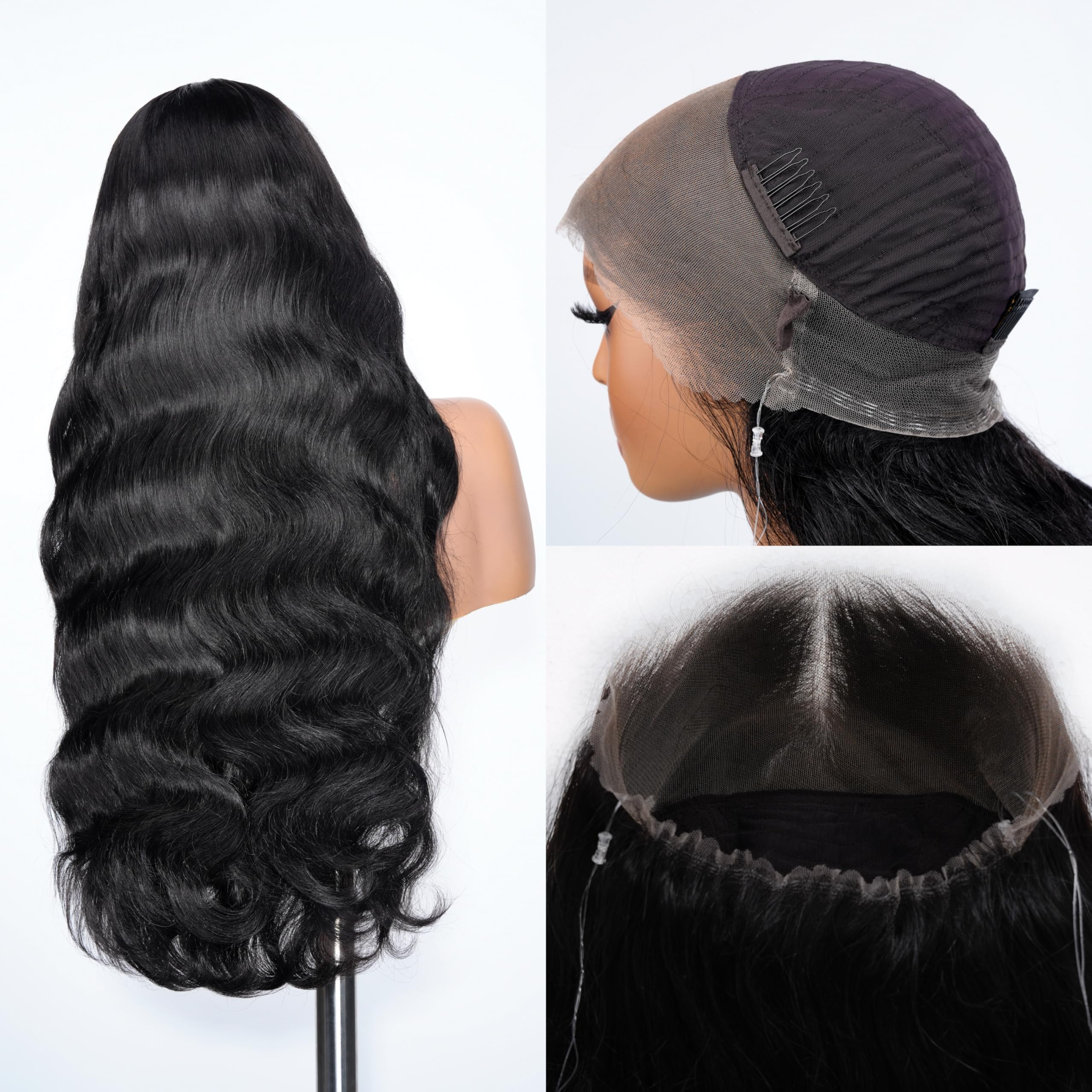
Built for smaller heads: a genuine 21.5-inch cap on a 360 lace base — ponytail-friendly.
Average circumference, large temple-to-temple. The cap fits around your head but lifts at the nape when you bend over. Anti-slip band designs (UNICE and KLAIYI's "Bye Bye Slip" lines) were built for exactly this — a grippy internal band that anchors the cap without glue:

Espresso-brown loose wave on UNICE's anti-slip 7x5 base — 427 ratings.
All measurements large (23"+). Skip standard caps entirely and look for 360 lace or full perimeter lace constructions, which flex across a range of heads, paired with drawstring adjustable systems. Drawstring caps pull the whole perimeter in a full size:
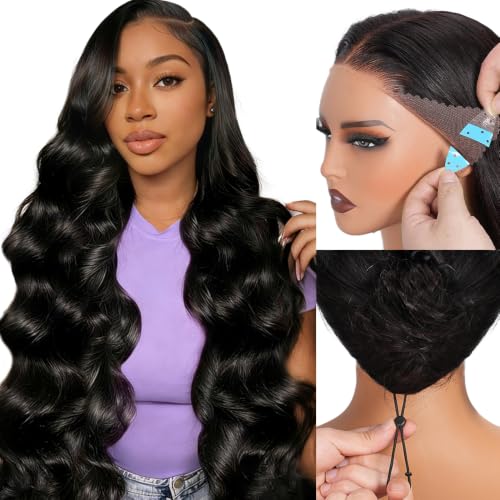
250 density at 28 inches — the maximum-fullness body wave, with a drawstring for security.
Between sizes. Buy the smaller size. This is the rule professional fitters repeat, and the reason is mechanical: adjustable straps, combs and grip bands can only tighten a cap. Nothing in a wig loosens one. A 22.25" head in an average cap is one strap-click to perfect; the same head in a large cap is a slip-and-slide all day.
When "One Size Fits Most" Actually Fits
The wear-and-go revolution happened because cap engineering got better, not because heads got smaller. Modern glueless caps combine a stretch-weave base, adjustable straps at the nape, combs at the front and sides, and increasingly a full internal grip band — collectively covering roughly a 21.5" to 23" range. If your circumference lands in that band, almost any well-reviewed glueless wig will fit you out of the box, which is why fit complaints have dropped so dramatically in recent Amazon reviews.
The best-engineered caps we carry right now come from Luvme's 7x6 line (wide parting plus full grip system) and the pre-cut closure wigs from BEEOS, whose 2x6 ultra-thin design is the easiest blend in the catalog for new wearers:
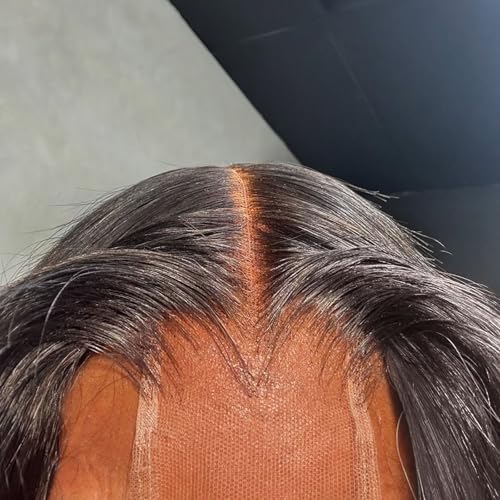
The easiest lace you'll ever blend: a 0.01mm 'invisible' 2x6 closure, pre-plucked, $44.99.
The Bandeau Test (No Tape Required)
No tape measure? Here's the field test. Take a snug headband, scarf or pair of tights and wrap it around your hairline exactly where a wig's edge would sit — front hairline, above the ears, around the occipital bone. Now check three things: does it stay when you shake your head gently (circumference OK)? Where does it sit on your forehead after ten minutes — same place (front-to-nape OK)? Does the back ride up when you look down at your phone (temple-to-temple OK)?
The headband won't give you numbers, but it replicates the exact physics of a glueless cap. If a snug band passes all three checks, a standard glueless wig will fit you. If the back rides up on the band, it will ride up on a wig too — shop anti-slip or drawstring designs from the start.
Fit Problems and Their Real Fixes
Wig slides during the day. Your circumference is smaller than the cap, or your straps are maxed out. Fixes in order of effort: tighten the straps; add a grip band underneath (the $8 accessory that saves $150 wigs); add combs if the cap lacks them; or move to a small-cap construction like the 21.5" 360 lace above.
Nape lifts when you look down. Temple-to-temple mismatch. The anti-slip band designs fix this; short of that, a sewn-in nape comb is the traditional remedy. Never solve nape lift with more glue — you'll fight your scalp's health for a problem that's mechanical.
Forehead pressure or headache. Cap too small, or front-to-nape too short. Some pressure eases as caps break in over the first week; genuine headaches don't. Upsize, and prefer lace fronts (they flex where closed weftage doesn't).
Ear tabs sit wrong. Ear-to-ear measurement off from the cap's assumption. Styles with deeper parting space (13x6 and 7x5/7x6 fronts) give the lace more room to flex over tab placement differences.
Q: How do I measure my head for a wig without a tape measure?
Use a piece of string or a shoelace instead: wrap it around your hairline exactly where a wig's edge sits, pinch the overlap point, then lay it flat against a ruler. The string technique is actually more accurate than a floppy tape for the front-to-nape and temple-to-temple measurements, because string doesn't kink on the curves of your skull.
Q: Are most wigs one size fits all?
Most are built on a 22.5-inch "average" cap with adjustable straps that tighten about half an inch in either direction — so "one size fits 21.5 to 23 inches" is closer to the truth. If you're inside that range, standard caps work. Outside it, small-cap or large-cap constructions exist, but they're genuinely rare on mass-market stores, which is why we stock the 21.5-inch small-cap 360 lace for petite heads.
Q: Should I size up if I'm between wig sizes?
No — size down. Adjustable straps, combs and grip bands only tighten a cap; nothing loosens one. A slightly large wig with the straps maxed still slides; a slightly snug wig relaxes to perfect within a week as the cap breaks in. This is the single most common fitting mistake we see in reader mail.
Q: Why does my wig lift at the back when I bend over?
Your temple-to-temple measurement is larger than the cap assumed, so the nape edge can't grip the curve of your occipital bone. The modern fix is an anti-slip band (look for "Bye Bye Slip" in listings); the traditional fix is a small sewn-in nape comb; the wrong fix is more adhesive, which trades a fit problem for a scalp problem.
Q: Do wig caps stretch over time?
Yes — about a quarter to half an inch over the first months of regular wear, as the elastic and weave relax. Buy with that in mind: a cap that fits perfectly on day one will be a strap-click tighter need by month three. This is another reason buying slightly snug beats buying slightly loose.
Q: Does cap size affect which styles I can wear?
It affects which constructions you can wear more than which styles. Small heads get the best results from 360 lace and four-comb caps; larger heads should prioritize adjustable + drawstring systems and stretch-weave bases. The style itself — bob, body wave, curly — is limited only by the cap constructions available in your size.
Comments
Recommended in this guide
Human Hair250 density at 28 inches — the maximum-fullness body wave, with a drawstring for security.
Human HairBuilt for smaller heads: a genuine 21.5-inch cap on a 360 lace base — ponytail-friendly.
Beginner PickHuman HairThe easiest lace you'll ever blend: a 0.01mm 'invisible' 2x6 closure, pre-plucked, $44.99.
Human HairEspresso-brown loose wave on UNICE's anti-slip 7x5 base — 427 ratings.
Related guides
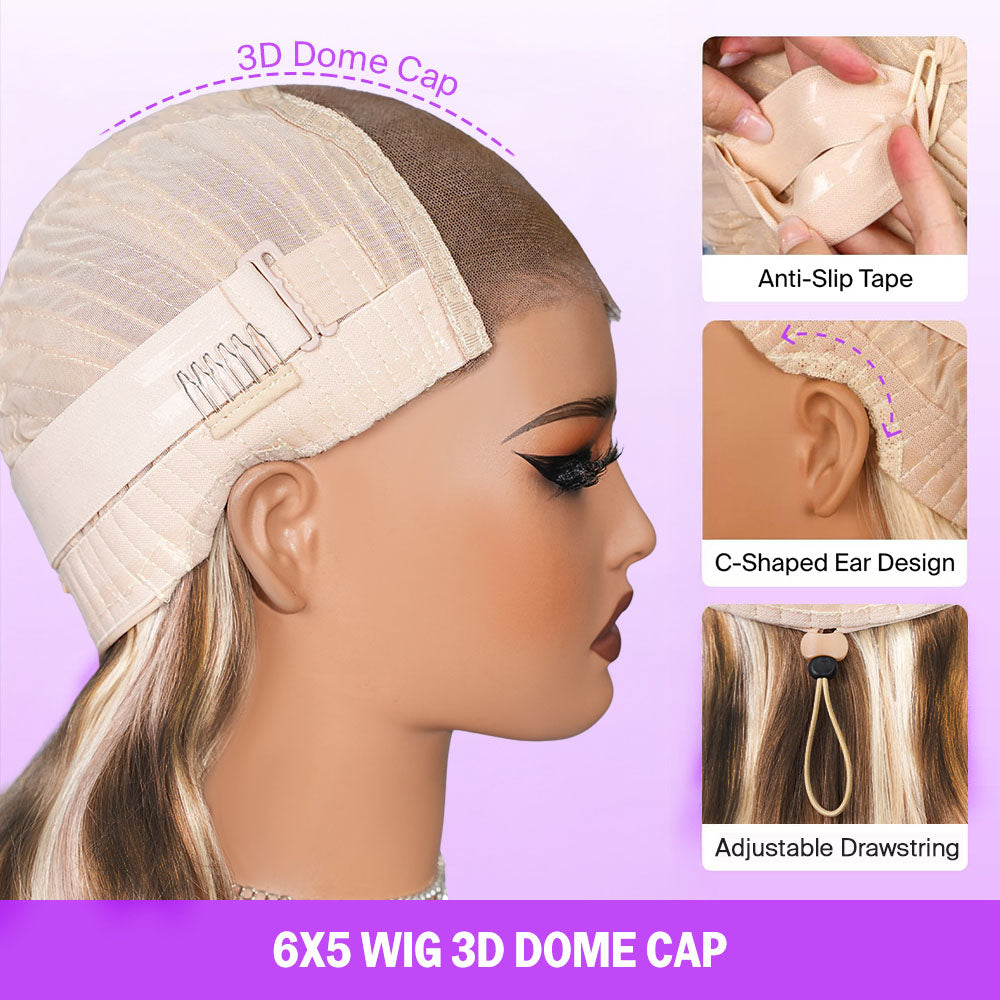
The 7 Best Glueless Wigs for Beginners (No Adhesive Needed)
Glueless caps, combs, elastic bands and headband designs — the easiest wigs to install if you've never worn one before.
Lace Front Wigs 101: A First-Time Buyer's Guide
Lace sizes, HD vs transparent, plucking, melting — everything you need to understand before buying your first lace front.
Wig Installation for Complete Beginners: Step-by-Step, No Salon, No Glue
The full at-home install in six steps — prep, cap, position, secure, blend, and the end-of-day ritual — written for first-timers with a $30 gear list and the five mistakes every beginner makes.