HD Lace vs Transparent Lace vs Regular Lace (And Which You Need)
The lace-material question, settled: what HD, transparent and regular lace each do on different skin tones, the durability trade nobody mentions at checkout, and when the premium is worth it.
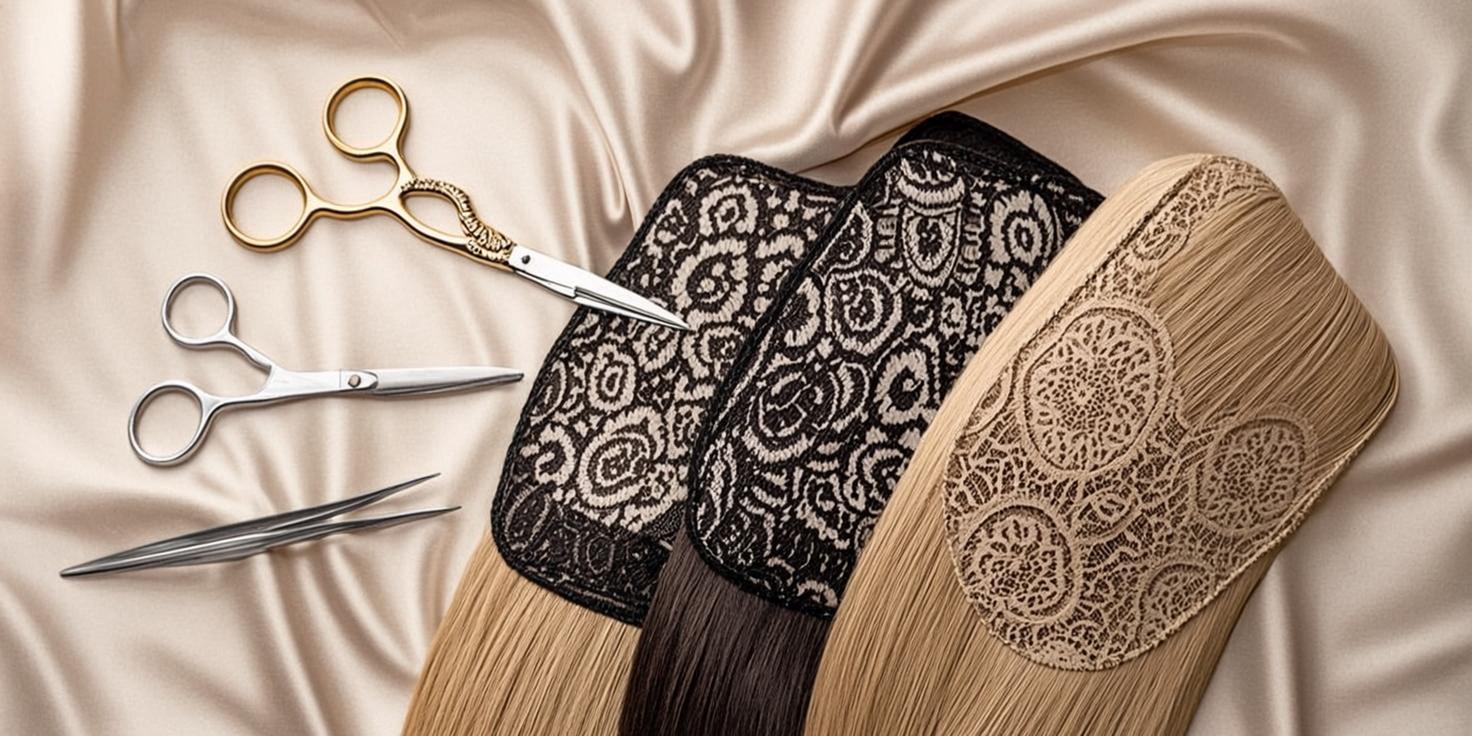
Ask three different sellers what "HD lace" means and you'll get three different answers, one of which will be about a television. The lace-material question — HD versus transparent versus regular (also called "normal" or "Swiss") lace — has quietly become the most consequential spec in wig shopping, because it's the difference between a hairline that disappears against skin and one that announces itself as mesh. This guide separates the marketing from the material, explains what each lace actually does on different skin tones, and tells you exactly when the HD premium is worth paying.
Here's the honest framing up front: all three lace types do the same structural job. They're all sheer mesh panels that hold the hand-tied hairline. The differences are color, thickness, and durability — which translate directly into how much the mesh visually disappears, how long it survives daily wear, and what you pay for the privilege. None of them is a scam; each is a point on a real trade-off curve.
The Three Laces, Defined
Regular lace — also sold as "Swiss lace," "normal lace," or just "lace" — is the original: a sturdy, medium-brown-tinted mesh that's been the standard for two decades of wig making. It's the thickest and toughest of the three, survives repeated installs and removals, and takes adhesive well. Its visual signature: at conversational distance the mesh reads as a faint grid with a beige-brown cast, particularly against deeper skin tones where the contrast between mesh color and skin is highest.
Transparent lace arrived as the first realism upgrade: a lighter, clearer mesh with essentially no tint. The same structure as regular lace, but pale enough to sit closer to light and medium skin tones without reading as a distinct color. Against deep skin it still shows — "transparent" is a relative term, not an invisible one — but the grid itself is finer and the overall effect is a step closer to scalp. Durability is similar to regular lace: robust, install-after-install survivable.
HD lace — "high definition" — is the current premium: a significantly thinner, finer, softer mesh engineered to disappear against skin. It's delicate enough that the strands appear to grow directly out of the surface with no visible grid at conversational distance, and under most indoor lighting even at arm's length. The cost of that delicacy is literal: HD lace is the most expensive panel to produce, and the least durable — it tears more easily during removal, tolerates fewer installs, and punishes rough handling. Think of it as race-car bodywork: gorgeous, lightweight, and not for casual parking.
Visibility on Skin: The Part That Matters Most
The right lace for you is largely a function of your skin tone and the lighting you'll live in — more than any other factor in this guide.
On light to medium skin tones, transparent lace already blends well; HD lace is an incremental upgrade that matters mostly under harsh light — stage lighting, direct sun, ring lights. Regular lace is workable when tinted with foundation at install, but the brown cast shows through in photographs more than wearers expect.
On deep skin tones, the gap between the laces is dramatic. Regular lace's brown tint reads as an obvious pale-ish grid; transparent lace reads better but still sits lighter than the skin around it; HD lace genuinely disappears — which is why the HD revolution was driven by and for deep-skinned wearers, and why reviewers on deep skin tones describe going HD as "never going back." If you wear a deep skin tone and your budget allows only one upgrade this year, make it HD lace; no other purchase changes the realism of your installs as much.
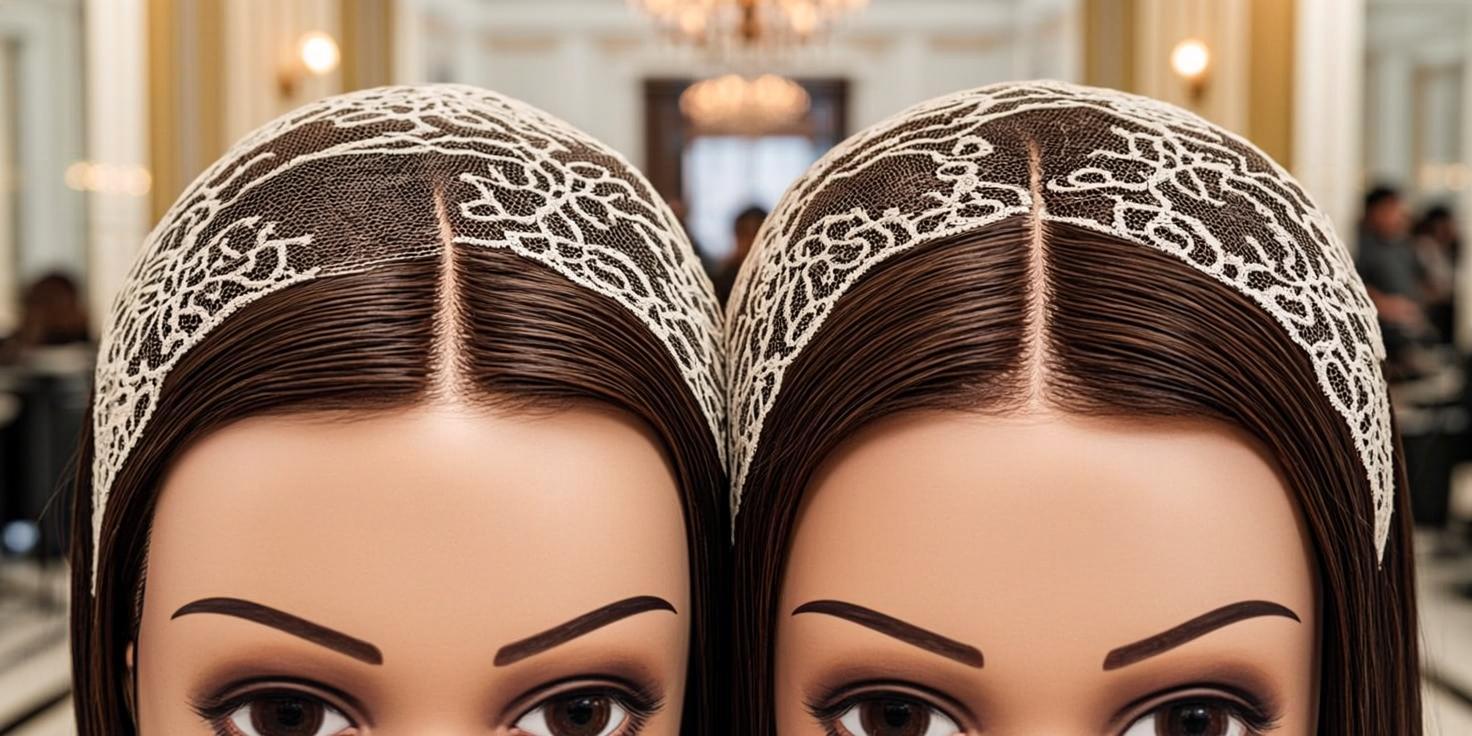
For everyone, the parting zone is where lace differences concentrate. The front hairline gets the baby hairs and the melt; the parting is bare mesh pretending to be scalp for as long as the eye follows it. HD lace in the part reads as scalp in daylight; transparent lace reads as scalp in soft light and as fine mesh in direct sun; regular lace reads as mesh with a tint.
A pixie-cut full lace unit in 12A virgin hair — the rare short full lace that parts anywhere and weighs almost nothing.
Durability: The Trade Nobody Mentions at Checkout
HD lace's thinness is a feature until it isn't. A typical HD frontal survives roughly half as many install-remove cycles as the same construction in regular lace — the mesh stretches, tears at the perimeter, and develops thin spots where adhesive pulled at it. Transparent lace splits the difference. If you're a daily glued-install wearer doing weekly removals, regular or transparent lace will outlast HD by months; if you're a glueless wearer installing gently every day, HD holds up considerably better because nothing aggressive ever touches the mesh.
There's also a maintenance asymmetry: HD lace needs gentler adhesive remover, patience at the hairline, and ideally a satin wrap at night to keep the front from creasing. Regular lace shrugs off the standard remove-and-go routine. Many experienced wearers solve this by keeping two units: an HD wig for events, camera days, and the styles where the hairline is the whole look, and a transparent or regular-lace workhorse for the gym, the beach, and the days nobody's filming.
Price: What the Upgrade Actually Costs
At the time of writing, moving the same wig from regular to transparent lace typically adds little — often under $15 — because the materials and labor are similar. Moving to HD lace adds $30–100 on mid-market human hair units, and proportionally more on premium hand-tied work. On synthetics the HD premium is smaller in absolute terms but the realism payoff is also smaller, because synthetic hairline density and knot quality limit the ceiling anyway.
The smart money pattern we've observed across the market: buy HD where you see it most — frontals and full-lace units whose entire value proposition is the hairline — and don't pay the HD premium on closures with dense parting coverage, where the lace hides behind concentrated hair anyway.

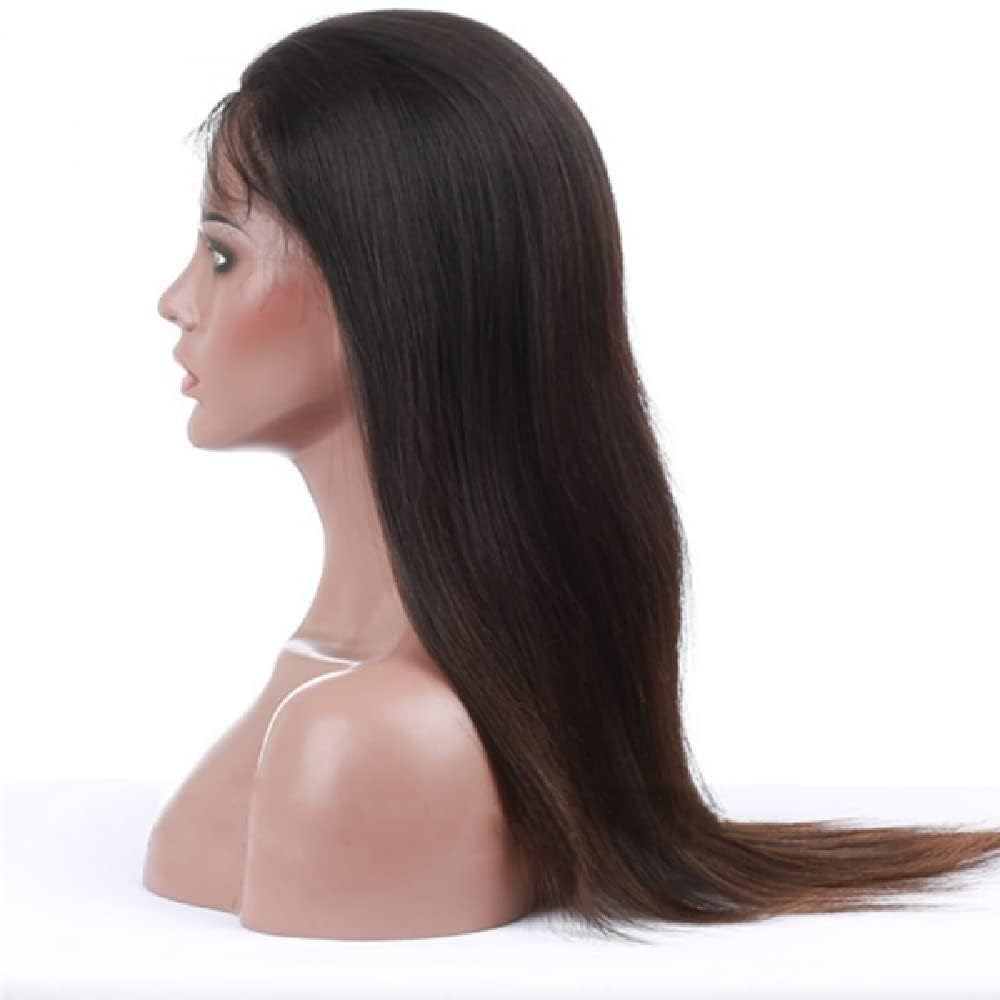
Handmade 180% full lace unit in silky straight — the whole cap is sheer lace, so it parts anywhere and wears cooler than frontals.
Prep Differences: Bleached Knots, Melting, and Tinting
Regular and transparent lace nearly always need their knots bleached or tinted — the dark knots at the root of each hand-tied strand are visible through the mesh and are one of the classic "wig tells." HD lace, being finer, shows knots less to begin with, and many HD units ship "pre-plucked with bleached knots" precisely because the material rewards it. If you buy a non-HD unit, budget either the ten minutes to bleach knots yourself or the salon visit — the difference between bleached and unbleached knots on transparent lace is bigger than the difference between transparent and HD.
The melt itself also differs. HD lace melts with nothing but tension and body heat on well-matched skin — many wearers install it glueless and skip adhesive entirely. Regular and transparent lace almost always want either adhesive or a lace tint (foundation matching the mesh to skin) to fully disappear. If you're committed to fully glueless life, HD lace isn't a luxury — it's the material that makes the lifestyle work.
The "Skin-Melt" and "Invisible" Marketing Names
The market has sprouted sub-brands of thinness: "skin-melt lace," "invisible lace," "ultra-thin," "0.10mm" panels, and so on. These are all variations on the HD concept — thinner, finer, more delicate, more expensive. Treat the names as a thinness spectrum rather than distinct categories, and judge by two practical numbers when listings provide them: panel thickness (thinner melts better, tears faster) and how many installs the manufacturer implies it survives (nobody publishes this directly; review sections reveal it within a dozen comments).
Our testing observation across the units we've handled: once you're on quality HD-class lace, the differences between brand names of thinness are smaller than the differences in how well each factory pre-plucks the hairline. Hairline work beats mesh branding.
How to Choose in Sixty Seconds
Deep skin tone: HD lace, full stop — it's the single biggest realism upgrade available to you. Light to medium skin tone: transparent lace is your value pick; upgrade to HD for frontals, full lace, and camera-heavy use. Daily glued installs with weekly removals: transparent or regular for durability, HD only if you accept replacing the unit sooner. Glueless wearer: HD rewards you most — the melt without adhesive is real. Buying a closure wig with dense parting: save the money; lace class barely shows. Buying a frontal or full lace: this is where HD earns its premium every single day.

12A-grade glueless full lace in a shoulder-length body wave — all-day airflow, no adhesive, and a wave that hides minor install sins.
Q: Is HD lace really better than transparent lace?
Visually, yes — HD lace is thinner, finer, and disappears against skin far more convincingly, especially on deeper skin tones. Structurally, no — transparent lace is tougher and survives more install-remove cycles. "Better" depends on what you're optimizing for: maximum realism today (HD) or maximum lifespan per dollar (transparent). Many wearers own one of each and deploy them for different occasions.
Q: What skin tones should not use HD lace?
There's no skin tone that shouldn't — HD lace disappears on everyone. The honest caveat is economic, not visual: on very light skin tones, transparent lace already blends nearly as well, so the HD premium buys a smaller visible improvement than it does on deep skin tones. If you're light-toned and budget-limited, spend the difference on better hair instead; if you're deep-toned, spend it on HD without hesitation.
Q: Why does my transparent lace look white in photos?
Camera flash and ring lights hit the mesh at angles your eye never does, and transparent lace's slight paleness becomes a bright line exactly where you least want it. The fixes: tint the lace to your skin tone with foundation before install, avoid pulling it too far down onto your forehead, and for camera-heavy days choose HD lace, which doesn't have the bright-line failure mode under flash.
Q: Does HD lace tear easily?
Compared to regular lace, yes — it's roughly half as durable in cycles of install and removal, and it punishes rough adhesive removal specifically. Handled gently (glueless or low-tack adhesive, patient removal with proper solvent, satin wrapping at night), quality HD lace lasts a full season of regular wear. Handled the way regular lace shrugs off, it tears at the perimeter within weeks.
Q: Can you tint HD lace with foundation?
You can, but you mostly shouldn't need to — HD lace is engineered to disappear without tinting, and foundation adds a layer that slightly dulls the effect. Reserve tinting for regular and transparent laces, where matching the mesh to your skin tone is the whole point. If an HD unit's lace somehow reads light against your skin, the more effective fix is a whisper of brown eyeliner at the parting, not an all-over tint.
Comments
Recommended in this guide
Human HairHandmade 180% full lace unit in silky straight — the whole cap is sheer lace, so it parts anywhere and wears cooler than frontals.
Human Hair12A-grade glueless full lace in a shoulder-length body wave — all-day airflow, no adhesive, and a wave that hides minor install sins.
Human HairA pixie-cut full lace unit in 12A virgin hair — the rare short full lace that parts anywhere and weighs almost nothing.
Related guides
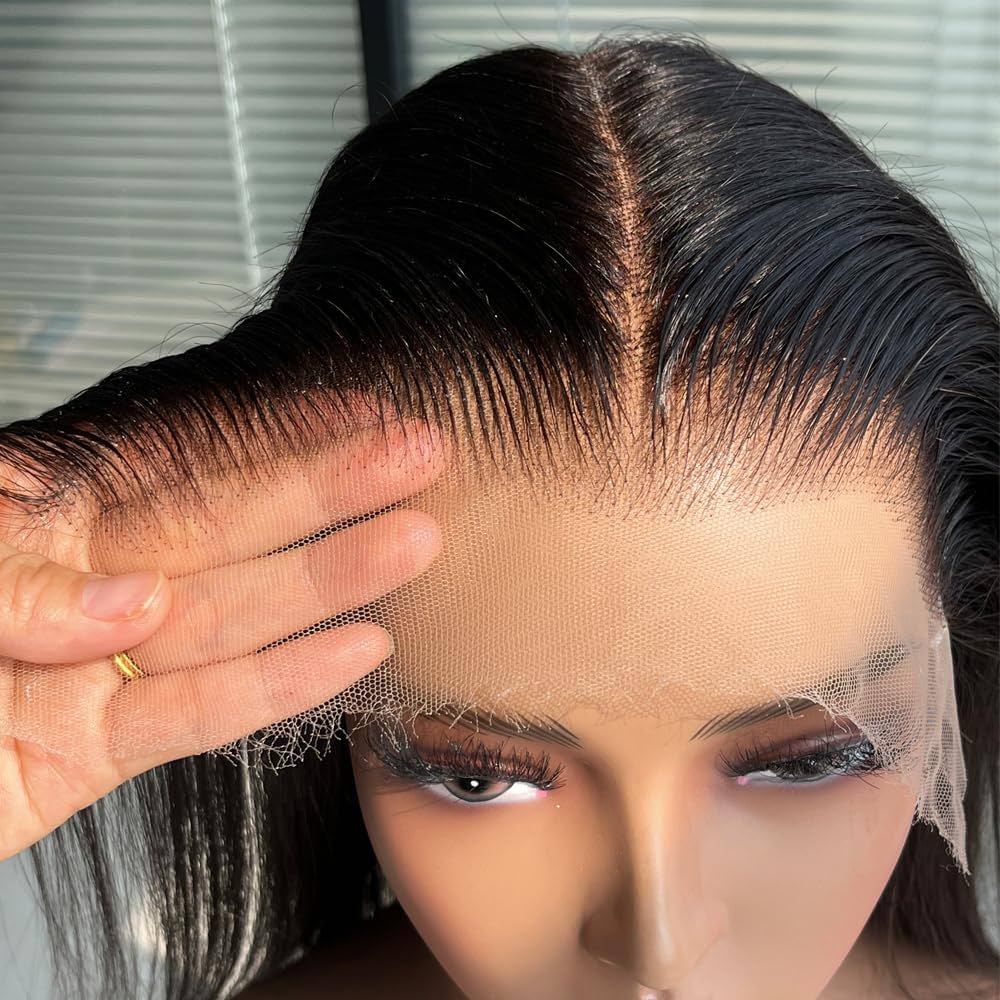
Lace Front Wigs 101: A First-Time Buyer's Guide
Lace sizes, HD vs transparent, plucking, melting — everything you need to understand before buying your first lace front.
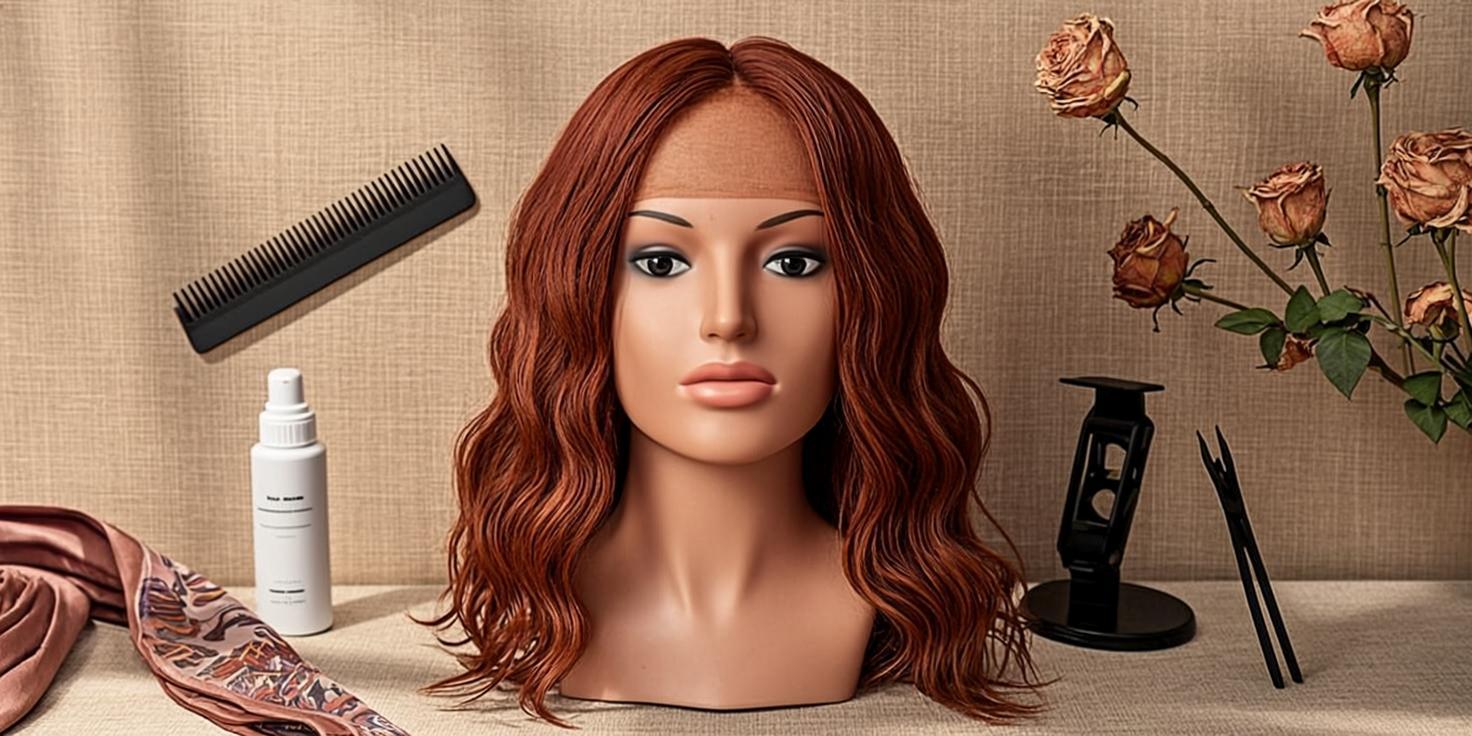
13 Wig Mistakes That Make Yours Look Fake (Fix Each One in Under a Minute)
A 'clocked' wig is almost never a cheap wig — it's a good wig worn with one of thirteen tiny setup errors. The symptom, the reason it looks fake, and the 60-second fix for each, from plastic shine to helmet density to lace lines you can see from space.
13x4 vs 13x6 Lace: Which Lace Size Should You Buy?
One character apart in the spec, $30–80 apart in price, worlds apart in styling freedom. What the numbers measure, what each size can and can't do, and when the upgrade is worth it.