13 Wig Mistakes That Make Yours Look Fake (Fix Each One in Under a Minute)
A 'clocked' wig is almost never a cheap wig — it's a good wig worn with one of thirteen tiny setup errors. The symptom, the reason it looks fake, and the 60-second fix for each, from plastic shine to helmet density to lace lines you can see from space.
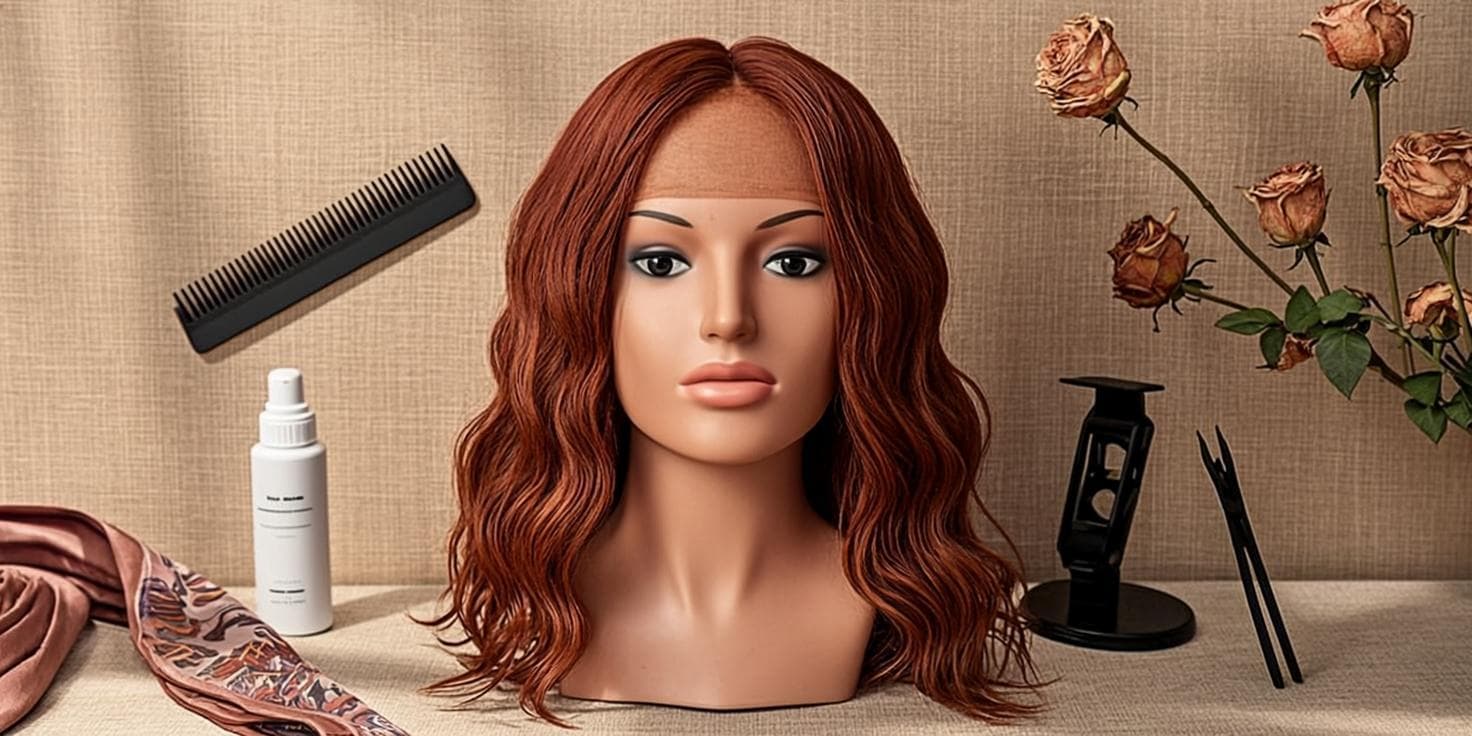
Nobody ever says "nice wig" the way you hope they will. What they say is "new hair?" — and that tiny difference is everything. The truth that wig veterans learn (and beginners panic over) is this: a "clocked" wig is almost never a cheap wig. It's a good wig worn with one of thirteen tiny setup errors, each of which takes under a minute to fix. We've spent hundreds of hours installing, melting, and (yes) ruining wigs to isolate the exact moments where "natural" falls apart — and every single one of them happens before you even leave the bathroom.
This guide is the anti-panic checklist. Work through the thirteen mistakes below in order — most people are making two or three of them, not all thirteen — and you can take any wig, from a $12 synthetic to a $300 raw hair unit, from "obvious" to "is that her real hair?" before the day is out.

Mistake 1: The Shine That Screams Synthetic
You can spot a shiny wig across a parking lot. Healthy human hair reflects light in soft, broken highlights because each strand sits at a slightly different angle; cheaper synthetic fiber reflects it in one flat, glossy sheet — the "Barbie box" effect. The good news: this is the single fastest fix on the list.
The 10-second fix: a whisper of dry shampoo (or a dedicated anti-shine wig spray) misted from eight inches away, then brushed through. Dry shampoo breaks up the flat reflection instantly. If you haven't bought the wig yet, tilt the fiber toward a window in photos — the listing pictures never show the shine, so check reviews for real-world lighting.
Mistake 2: The Lace Line You Can See From Space
An unmelted lace edge looks like a straight, slightly gray line across your forehead — the number-one giveaway in close-up photos. The lace itself isn't the problem; the gap between "attached" and "invisible" is.
The fix, in two layers: first, tint the lace if it ships lighter than your skin (a dab of liquid foundation on the inside of the lace, brushed and dried, takes ten seconds). Second, melt it — a hot, damp towel pressed along the hairline for 20–30 seconds bonds the lace to your skin so the edge disappears. If you'd rather skip the ritual entirely, pre-plucked HD lace wigs get you 90% of the way out of the box. This glueless deep wave with 13x6 HD lace is a strong example — pre-plucked hairline, transparent lace that blends with medium and deep skin tones without any tinting:

Extra-long 200-density deep wave with the rare combo of 13x6 lace and glueless cap.
Mistake 3: A Hairline That's Too Perfect
Real hairlines are uneven. They have thinner spots, stray baby hairs, and a slightly asymmetric shape. A wig that ships with a wall of hair from temple to temple reads as a helmet even when everything else is right — density at the hairline is the difference between "hair" and "cap."
The fix: pluck. With tweezers and two minutes (okay, two minutes — this is the one place we cheat the "under a minute" rule), thin the first half-inch of the hairline in a soft zigzag pattern, concentrating density slightly off-center, the way a real head grows. Or buy pre-plucked and skip the tweezers — this 30-inch body wave arrives with a graduated hairline and baby hair already in place, which is why it photographs so naturally at the temples:

Waist-length body wave with 200 density and 4.4 stars from early reviewers.
Mistake 4: Your Forehead Shrunk Overnight
If your wig sits even a centimeter too low, your forehead shortens, your proportions go wrong, and everyone's brain flags "something is off" without knowing what. This is the most common install error and the most invisible to the person wearing it — you get used to the wrong position in the mirror within minutes.
The fix: place the lace at your natural hairline — the point where your forehead skin meets hair, which you can find by raising your eyebrows and feeling where the skin stops being smooth. Then secure the back BEFORE the front. A wig anchored at the natural hairline instantly restores correct facial proportions, and it stays put better too, because the cap isn't fighting its own tension.
Mistake 5: A Part Line Drawn With a Ruler
A dead-straight, razor-sharp middle part with identical hair on both sides is the geometry of a doll, not a human head. Nobody's real part is perfect — and the perfection is exactly what reads as fake.
The fix: rough it up. Drag a tail comb once diagonally off-center instead of straight back, then use your fingertips to loosen the first inch of hair on either side of the part so it isn't wall-straight. Ten seconds, and the part suddenly has "history" — like hair that has actually been lived in.
Mistake 6: Helmet Density
Density mistakes run in both directions, but the fake-looking one is always the same: too much hair for the length and style. A 250% density bob looks like a sponge; even a long wig past 200% starts looking like costume volume rather than hair volume.
The rule of thumb we use across our entire catalog: bobs and short cuts sit naturally at 150–180% density, and long styles hold up to 200%. Past that, you're buying silhouette, not realism. For long styles specifically, 200% is the ceiling where fullness still moves like real hair — this 30-inch deep wave at 200% is the density we'd point to as the reference standard for long wigs:

The 200-density alternative for 30-inch deep waves — 4.1 stars.
Mistake 7: A Color That Fights Your Skin (Instead of Warming It)
The fastest way to look like you're wearing a costume is a color chosen from a photo instead of from your own face. The classic disasters: ash-blonne on golden-warm skin turns sallow; jet black against warm brown skin can flatten; and the wrong "red" is the difference between expensive and clownish.
The fix: match the color to the veins on your wrist and the brows on your face. Warm undertones (green-ish veins, golden brows) light up with copper, auburn, and honey. Cool undertones (bluish veins, ash brows) own jet black, ash blonde, and burgundy. If you're warm-toned and want the seasonal copper moment, a true auburn with brown base — not fire-engine red — is the shade that reads "expensive salon" rather than "October 31st":

Auburn reddish brown body wave with ponytail-able 360 HD lace — 4.4 stars across 337 ratings.
Deeper skin tones get stunning contrast from burgundy 99J tones, which photograph rich rather than costume-y in indoor light:

Rich burgundy 99J color, 28 inches of body wave, 180 density.
Mistake 8: Baby Hairs Cemented Into a Sculpture
Baby hairs are supposed to look like hair. When they're gelled into a lacquered swirl that could survive a hurricane, they stop softening your hairline and start announcing it. The goal is "casually imperfect," not "airbrushed logo."
The fix: half the gel you're using, applied with a toothbrush instead of a brush, and then — the pro move — press the laid hairs with a scarf for 30 seconds and lightly rough a few back up with your fingertip. Baby hairs that look slightly lived-in are the ones that read as real.
Mistake 9: Bone-Straight With Zero Movement
Real straight hair moves. It has layers that catch light differently, a few shorter pieces around the face, and micro-lift at the crown. A perfectly uniform one-length straight wig looks like laminated paper — flat, static, and faintly plastic no matter how good the fiber is.
The fix if you already own the wig: bend the flatness — a single loose braid left in for an hour gives straight hair the memory of movement, and face-framing pieces pinned back loosely will break the sheet of hair around your jaw. The fix at purchase time: choose cuts with built-in layers. Layered straight styles move the way real hair does because the lengths were designed to, like this layered 24-inch straight wig that keeps body all the way to the ends:

A 9x6 lace area — larger than 13x6 — at 200% density for under $52.
Mistake 10: A Cut That Belongs to Someone Else's Face
Every wig comes cut the way the factory cut it — a generic shape designed to look okay on everyone and perfect on no one. Wearing it raw is like wearing a suit straight off the rack with the tags on: nothing is technically wrong, and everything looks wrong.
The fix that separates people whose wigs get compliments: take the wig to a salon (or a barber — seriously, they're brilliant with short cuts) and have 10 minutes of face-shape customization done. Nipping the sides, softening the bang line, or point-cutting the ends to your jaw costs a fraction of the wig and transforms it. This is especially true of pixie cuts, which live or die on how they frame the face — a layered pixie like this one is designed as a styling canvas, meant to be taken to a stylist for the final shaping:

Sub-$25 layered pixie cut in natural black — 2,593 ratings of social proof.
If you'd rather have the shape arrive ready-made, the throw-on-and-go pixies come pre-cut and styled for a soft, natural frame right out of the box:

5-inch human-hair pixie with silicone anti-slip pads — 4.5 stars, comfort-first design.
Mistake 11: Your Edges and Ears Disappeared
When a wig's sides sit over your ears and your natural edges are completely hidden, the wig reads as a sealed unit — like a swim cap with hair. Real hair reveals its wearer: a hint of ear, a whisper of natural hairline blending in at the sides.
The fix: lift and tuck. Position the cap so the ear tabs sit slightly behind your ears, not over them, and blend any leave-out with a light brush forward. If you wear your natural edges out, a toothbrush and a touch of mousse marry them into the wig's hairline in about fifteen seconds. The seam between you and the wig is where realism lives.
Mistake 12: The Frizz Halo By Week Two
Nothing exposes a wig's age like a halo of frizz that appears — seemingly overnight — around the crown and nape. It isn't the wig failing; it's almost always friction: brushed dry, stored crumpled, slept in, or dried with a terrycloth towel (the four horsemen of wig frizz).
The fix takes seconds but saves months: store it on a stand (not in a bag, not in a drawer), detangle from the ends up with a wide-tooth comb, and blot — never rub — after washing. A silk scarf or bonnet for sleeping is the single highest-leverage habit in wig care. Frizz control is maintenance math: thirty seconds a day buys you months of "new wig" texture. Our full care routine is in the free wig care checklist — grab it from the newsletter box below.
Mistake 13: Wearing It "Too New"
A brand-new wig parted perfectly, lying perfectly, and behaving perfectly is doing the one thing real hair never does: nothing. Real hair has a cowlick, a preferred side, and a slightly lazy section. A wig worn for the first time to an important event looks nervous — stiff, unbroken, over-arranged.
The fix: break it in like a pair of shoes. Wear the wig around the house for a few hours before its debut: run your fingers through it, let it find its own fall, sleep-adjacent lounging is ideal. Hair that looks slightly "worn" is hair that looks real. The irony of wig realism is that the last 10% of looking natural is letting the wig relax into being imperfect.
The 60-Second Pre-Door Checklist
Run this before you leave and you'll catch 95% of these mistakes in one mirror pass:
- Forehead check — wig sits at your natural hairline, not below it
- Lace check — edge melted flat, no visible line, tint matches your skin
- Part check — slightly off-center, slightly imperfect
- Sides check — ears visible, edges blended
- Shine check — no plastic gloss at the crown
- Movement check — hair moves when you turn your head
Frequently Asked Questions
How do I make a cheap wig look real? Kill the shine (dry shampoo), pluck the hairline, and cut the length slightly shorter than you think you want — cheap wigs almost always look "more expensive" one inch shorter. Two of the thirteen fixes above cost nothing and fix 80% of a budget wig's realism problems.
What density looks most natural? For most styles: 150% for short cuts and bobs, 180% for medium lengths, 200% for long styles. Anything above that reads as volume rather than hair, and anything below 130% can read thin in photos.
Where exactly should a wig sit? At your natural hairline — raise your eyebrows and find where your forehead skin stops. Front lace goes there, with the cap's ear tabs just behind your ears, before you secure anything at the back.
Do I have to pluck the hairline if the wig says "pre-plucked"? Usually not — pre-plucked wigs need at most a few strategic tweezes to make the hairline asymmetric. If your wig ships with a full, straight hairline, though, plucking is the highest-value two minutes in wig ownership.
Recommended in this guide
Human HairExtra-long 200-density deep wave with the rare combo of 13x6 lace and glueless cap.
Human HairWaist-length body wave with 200 density and 4.4 stars from early reviewers.
Color PickHuman HairRich burgundy 99J color, 28 inches of body wave, 180 density.
Human HairThe 200-density alternative for 30-inch deep waves — 4.1 stars.
Human Hair5-inch human-hair pixie with silicone anti-slip pads — 4.5 stars, comfort-first design.
Best ValueHuman HairA 9x6 lace area — larger than 13x6 — at 200% density for under $52.
Fall Color PickHuman HairAuburn reddish brown body wave with ponytail-able 360 HD lace — 4.4 stars across 337 ratings.
Budget HeroHuman HairSub-$25 layered pixie cut in natural black — 2,593 ratings of social proof.
Related guides

How to Care for Your Wig: Complete Maintenance Guide
Washing frequency, the right products, satin at night and storage — the routine that doubles your wig's lifespan.
How to Choose the Right Wig Length for Your Face Shape
Chin, shoulder, or waist? A two-minute mirror test to find your face shape — plus the wig length chart and the exact lengths that flatter round, oval, square, heart, and long faces.

Human Hair vs Synthetic Wigs for Beginners: How to Pick Your First Wig
Your first wig shouldn't be your dream wig. Here's the beginner-smart way to choose between human hair and synthetic — and the mistakes that cost new buyers the most money.