How to Choose the Right Wig Length for Your Face Shape
Chin, shoulder, or waist? A two-minute mirror test to find your face shape — plus the wig length chart and the exact lengths that flatter round, oval, square, heart, and long faces.
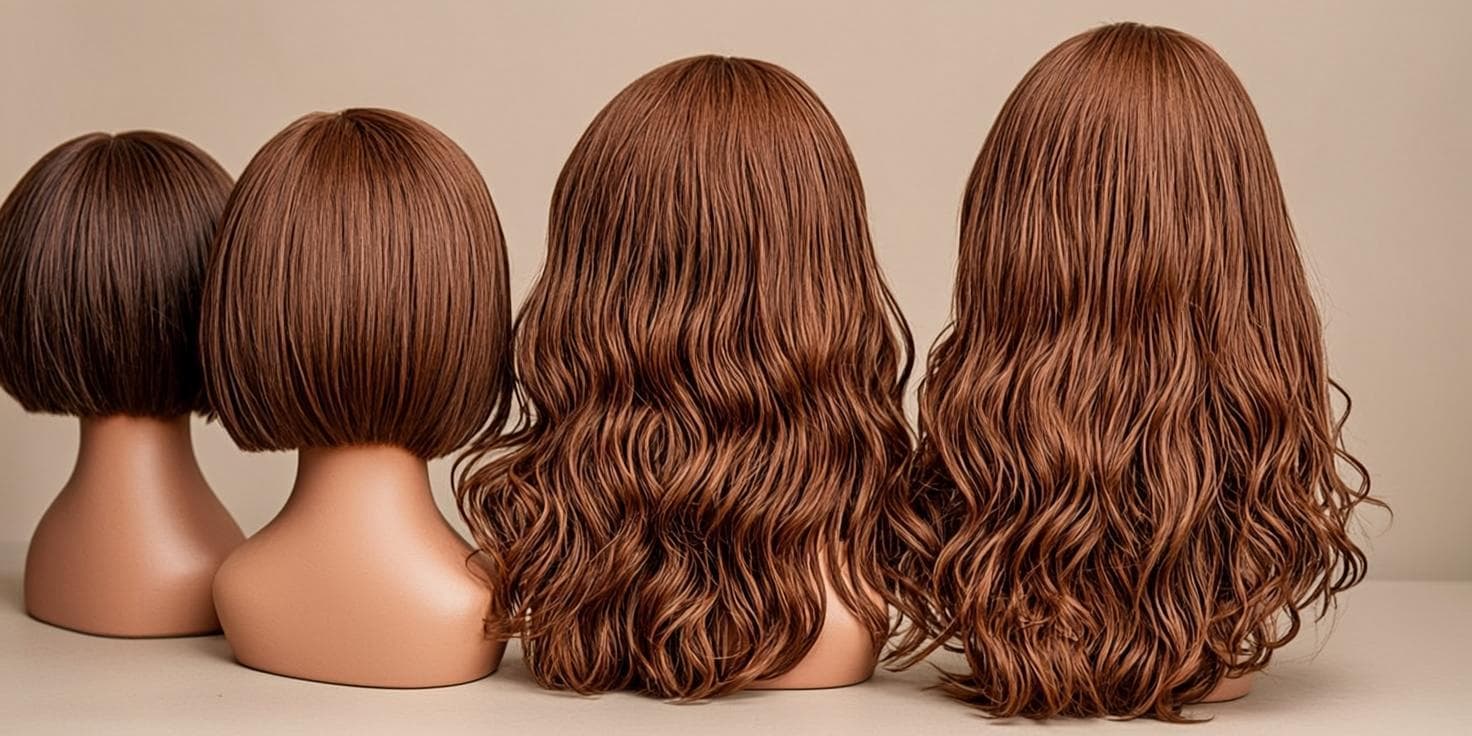
Color is the fun decision. Length is the flattering one. When a wig doesn't quite work, people blame the fiber, the price, or the lace — but nine times out of ten, the culprit is length. The wrong length doesn't look cheap; it looks borrowed. It reads "costume" at $150 and reads custom at $30, because length is geometry, and geometry is the first thing your eye registers. A budget synthetic at the right length will photograph better than premium human hair at the wrong one, every single time.
The good news: you don't need a stylist appointment to get this right. You need two minutes with a mirror, one honest look at your face shape, and the chart below. This guide gives you the mirror test, the wig-length chart in plain inches, the exact lengths that flatter each face shape, and the eight wigs we'd actually buy to prove every point.
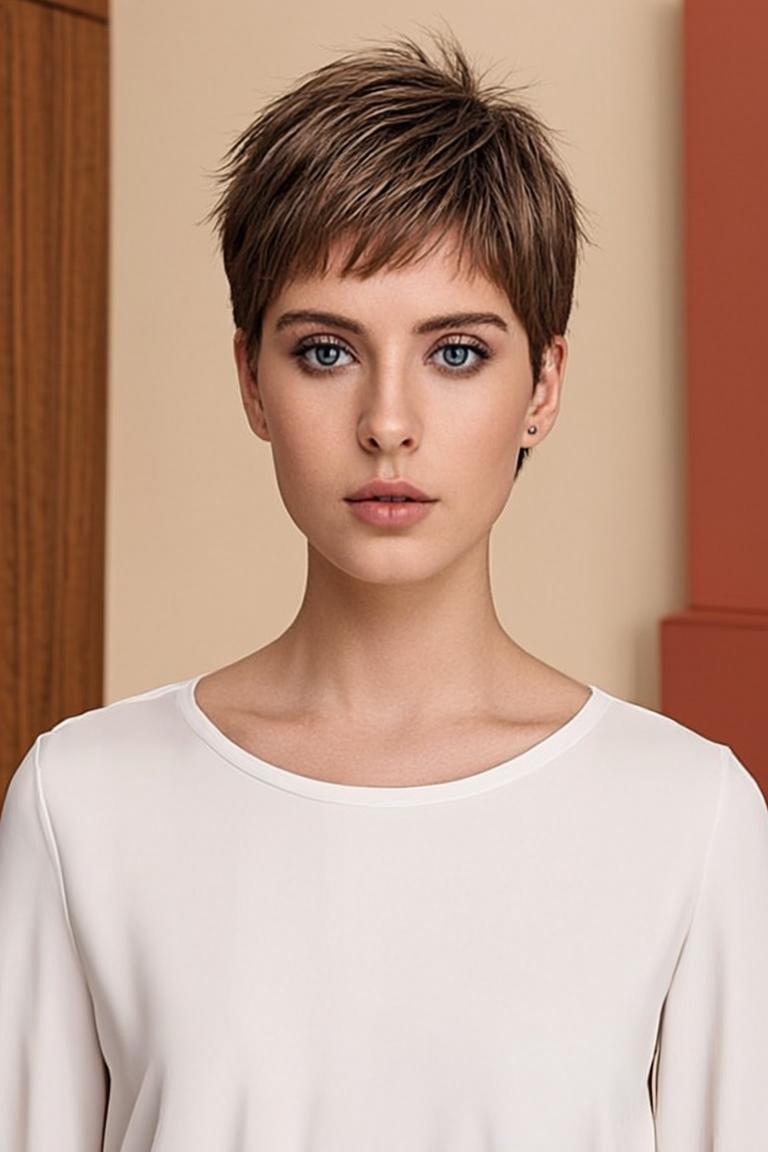
The Two-Minute Face-Shape Test
Pull your hair completely back — a wig cap or a tight headband works — and look at three landmarks: the widest point of your forehead, your cheekbones, and your jaw. Your face shape is simply the relationship between those three widths and the overall length of your face. Nothing more mysterious than that.
No measuring tape? Use the lipstick trick: trace your face's outline on the bathroom mirror with lipstick or a dry-erase marker, step back two paces, and look at the shape you drew. If you'd rather use numbers, measure straight across your cheekbones, then from the middle of your hairline to the bottom of your chin, and compare:
- Round: length and width are close to equal, with a softly curved jaw — your traced shape is a circle.
- Oval: face is roughly 1.5 times longer than wide, gently tapered chin, no sharp corners — an egg.
- Square: forehead, cheekbones, and jaw measure nearly the same, and the jaw is strongly angled.
- Heart: forehead and cheekbones are clearly wider than a narrow, pointed chin.
- Long (oblong): noticeably longer than wide — a stretched oval.
- Diamond: cheekbones are the widest point, with a narrow forehead and a narrow chin.
Most people are a blend of two shapes rather than a textbook example. When you can't decide, pick whichever shape your jaw matches — the jawline is where length decisions live or die.
The Wig Length Chart
Wig lengths are measured from the root (crown or nape, depending on the maker) down to the longest ends. That means a layered 18" wig will land shorter than a one-length 18" wig, and density changes where the hair sits, too. Here is where each range actually falls on most builds:
| Wig length | Where it lands | What it does |
|---|---|---|
| 4–6" (pixie) | Ear level or above | Bold and face-lengthening; maximum exposure, nowhere to hide |
| 8–10" (short) | Nape to jaw | Light, edgy, stays cool — flattering but unforgiving |
| 10–13" (chin bob) | At or just below the jaw | Graphic and sharp; the highest-risk, highest-reward range |
| 14–16" (shoulder) | Collarbone | The most universally flattering zone; layers shine here |
| 18–20" (mid) | Upper chest | Adds softness and visually elongates rounder faces |
| 22–26" (long) | Mid-torso | Statement hair; heavier, warmer, higher-maintenance |
| 28–30"+ (waist) | Lower torso | Dramatic; needs 200% density or more to avoid looking stringy |
Read the chart as a landing zone, not a law. Your height, neck length, and the wig's cap construction all shift where a given inch number actually falls on you — which is exactly why the face-shape match below matters more than the number on the box.
Round Face: Go Below the Jaw
A round face is width-forward, so the job of your wig length is to add vertical line. Chin-length bobs are the classic trap: they end exactly where your face is widest, and a blunt 11–12" hem on a round face echoes the roundness like a frame around a circle. The same face in an 18–20" wig with a deep side part reads visibly slimmer — instantly, no contouring required.
The formula that works: any length below the jaw, worn with movement (waves, loose curls) rather than a flat sheet, and parted off-center so the vertical line breaks up the circle. Straight styles are fine once you pass collarbone length; above it, stick to texture.
The wig to use. The 24" glueless body wave closure wig is practically engineered for this job — the length falls to mid-torso, the body-wave texture keeps the sides from going flat, and the 5x5 glueless cap means no install drama:
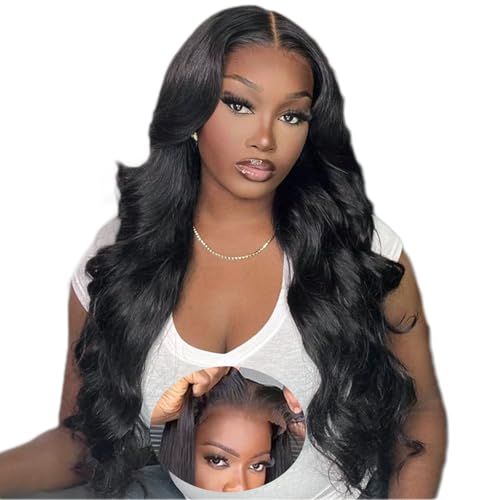
Pre-cut 5x5 HD lace closure you can install in about 30 seconds — no glue, no gel.
Oval Face: Lucky You — Nearly Everything Works
The oval face's balanced proportions (roughly 1.5:1 length to width, softly tapered chin) are why it's the shape every other shape is styled to imitate. Pixie, bob, shoulder, waist — the length question for you is genuinely about lifestyle, not flattering rules. "What do I want to wear?" is the actual question, and it's a luxury most wig shoppers don't have.
If you've been eyeing a dramatic crop, this is the face that makes a pixie look intentional rather than impulsive. The one caution: very long, very flat styles with a center part can start to make an oval face look longer than it is. Add waves from the ear down and the problem disappears.
The wig to use. LUVME's "throw on & go" pixie cut with bangs is the easiest possible way to test the crop — 4.5-rated, bangs included, no styling required:
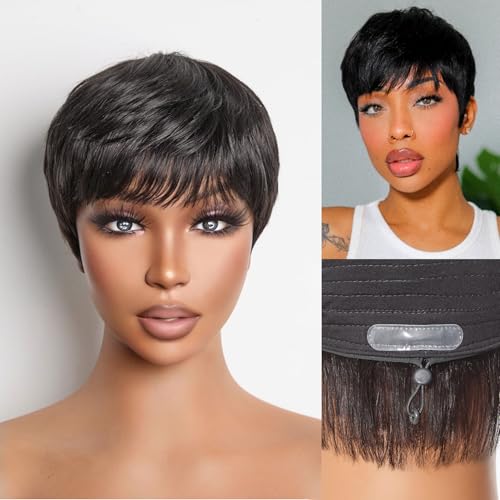
5-inch human-hair pixie with silicone anti-slip pads — 4.5 stars, comfort-first design.
Square Face: Soft Waves Past the Jaw
A strong, angular jaw is a striking feature — the goal is to melt the line, not echo it. A blunt chin-length bob on a square face creates two straight lines meeting at a right angle, which photographs as boxy. What flatters instead: soft waves that land below the jaw, where movement and weight carry the eye past the angles instead of stopping dead on them.
A side-swept fringe is the quiet power move for square faces — it softens the corners of the forehead without hiding the structure you presumably like. Avoid razor-straight hems at chin level, and be careful with slicked-back long styles that expose the full jaw; waves worn forward over the shoulders are the flattering version of long hair on this shape.
The wig to use. The La Denna 20" body wave in auburn is the full package here — 200% density so the waves stay full past the jaw, and the reddish-brown tone adds softness around the face. It's also our current fall color pick:
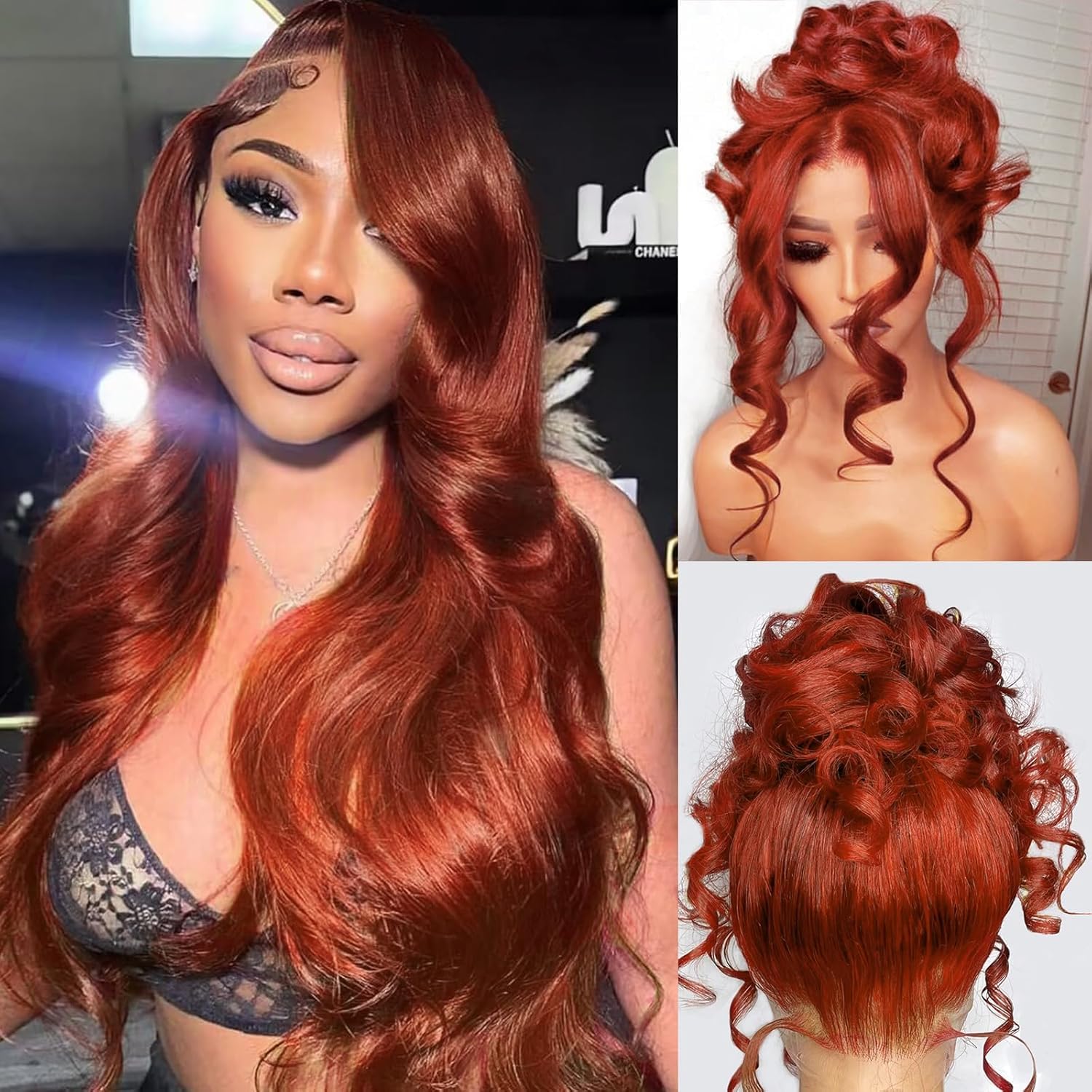
Auburn reddish brown body wave with ponytail-able 360 HD lace — 4.4 stars across 337 ratings.
Heart Face: Add Weight at the Jaw
A heart shape runs top-heavy: wide forehead and cheekbones tapering to a narrow chin. The flattering move is to rebalance the bottom — lengths from chin to shoulder, worn with texture concentrated at the ends, fill out the narrow zone so the face stops tapering to a point. A curly or wavy bob at 12–14" is the classic heart-shape home run.
Two things to avoid: long, flat, one-length styles (they drag the eye down to the pointed chin you're trying to balance), and heavy blunt bangs (they widen the already-widest part of the face). If you want fringe, go wispy or curtain-style — it covers forehead width while adding width at the cheekbone, exactly the redistribution a heart shape wants.
The wig to use. The Lativ short bob with brown highlights and soft waves is a rare budget pick with a serious track record — over 11,900 ratings, and the wavy ends do the jaw-filling work for you:

Brown-highlight curly bob with bangs — 11,913 ratings at 4.1 stars.
Long Face: Width at the Sides
An oblong face needs horizontal volume — anything that expands the silhouette sideways. Curls, waves, kinky and afro textures are all width machines, which makes them the best friends of the long face. The single worst combination for this shape is the one many people reach for by default: flat-ironed, center-parted, waist-length hair. That vertical sheet visually stretches an already-long face like taffy.
Shoulder-to-mid lengths with curl are the sweet spot — enough length to feel like "long hair," enough width to stop the stretch. A fringe is the other secret weapon: bangs visibly shorten the face's length and suit oblong shapes better than almost any other.
The wig to use. The 16" afro kinky curly layered wig from UNICE is width on demand — the layered kinky texture expands sideways from the cheekbone down, it's glueless, and it's rated 4.5:

Layered Burmese curls over an afro kinky base — 4.5 stars from early reviewers.
When You Want Long Hair Anyway
Set on 26–30 inches of drama? You can absolutely wear it — round and long faces just need to stack the deck. Choose 200% density so the perimeter looks full instead of stringy at that length. Choose waves or body wave over flat-straight (the wave adds width, which round and long faces both want). And on a round face, skip the center part for a deep side one. This is the rare case where more hair is the fix rather than the problem.
The wig to use. The 30" body wave with 13x6 HD lace at 200 density is the gold standard of long-hair-done-right — full perimeter, natural parting room, and it photographs like editorial hair:

Waist-length body wave with 200 density and 4.4 stars from early reviewers.
Where Cut Beats Length
Here's the pro secret that saves people hundreds of dollars: a layered 12–13" bob flatters more face shapes than a one-length 18" wig, because layers, curtain bangs, and side parts redistribute visual weight without changing a single inch of length. Face-framing layers that start at the cheekbone carve angles into a round face. Curtain bangs take visible inches off a long face. A deep side part breaks symmetry in a way no product can.
Before you buy a different length, try re-styling the one you own: move the part, pull two face-framing strands forward, brush the ends under or flick them out. A "free" restyle fixes half the length complaints people assume require a new wig.
The $25 Rule: Test Before You Invest
The cheapest experiment in all of wig wearing: buy a budget synthetic at your target length before committing to human hair. Wear it for a full week — wash day, the gym, a windy day, a long workday — and see how the length actually lives with your face and your routine. If it still delights you by day seven, upgrade to human hair at that exact length with confidence. If it fights you, you've learned your lesson for the price of lunch instead of the price of a car payment.
Two budget testers we'd happily use for this experiment — one at each end of the length chart:

Sub-$25 layered pixie cut in natural black — 2,593 ratings of social proof.

22-inch dark brown middle-part waves — the professional synthetic, 4.3 stars.
Match the Length to Your Life
Length is not only a face decision — it's a lifestyle contract. Long wigs tangle at the nape during sleep and sit on you in summer heat; expect a daily brush-out and a stand to store them properly (the full routine is in our wig care guide). Shoulder-length and above stays cool, packs flat for travel, and takes minutes to maintain — the practical pick if you wear a wig every day or live somewhere hot. Pixies are the lowest-maintenance length of all, but the highest-confidence one: there is nowhere to hide, so the fit has to be right. Match the length to the life you actually lead, not the one you're styling for one photo.
Three Mistakes That Undo Everything
- The blunt chin bob on a round face. The single most common bad length decision — it frames the widest part of the face with the hem of the hair. If you love bobs and your face is round, choose a layered one that ends two inches below the jaw.
- Flat, center-parted waist-length hair on a long face. Beautiful on the rack, taffy-stretching in the mirror. Add waves and move the part, or choose shoulder length with curl.
- Trusting the package number. An 18" layered wig lands differently than an 18" one-length wig; a 200%-density 20" falls differently than a 150% one. Buy the landing zone, not the inch number.
Frequently Asked Questions
Q: I genuinely can't tell what my face shape is — what now?
Do the lipstick trace on the mirror and take a photo of it — shapes that feel ambiguous in the glass are often obvious in a picture. Still stuck between two? You're almost certainly a blend, and blends follow the jaw: match your length strategy to whichever shape your jawline resembles. And remember that a deep side part and face-framing layers flatter every shape, so the stakes are lower than they feel.
Q: Does the listed wig length include the cap or just the hair?
Just the hair — measured from the root at the crown or nape to the longest ends, depending on the maker. That's why layered wigs "run short": the listed inches describe the longest layer, while the visible hem may sit two to four inches higher. Check the product's length and whether it's layered before you buy; on our product pages, both are listed in the specs.
Q: What wig length is best for a round face, in one sentence?
Eighteen inches or more, with waves or loose curls and a deep side part — and if you want short, go all the way to a pixie rather than stopping at the chin, because a true crop lengthens a round face while a chin bob widens it.
Q: Can I just buy a longer wig and trim it shorter?
For human hair, yes — a stylist can trim and re-layer it exactly like growing hair, and many people buy long and custom-cut. For synthetic, trimming is a one-way door: you can take an inch or two off the ends, but you can't add layers or re-shape the cut, because synthetic fiber won't restyle. The safer play is buying the right length in the first place — or testing the length with a budget synthetic before the human-hair investment.
The Short Version
Round faces: below the jaw. Oval: whatever you love — genuinely. Square: soft waves past the jaw. Heart: weight at the chin. Long: width at the sides. And whenever you're torn between two lengths, buy the $25 version first — geometry is cheaper to test than to regret.
Ready to shop with your new x-ray vision? Our best wigs of 2026 ranking covers every length category, the 13 wig mistakes guide shows the install errors that undo a perfect length, and beginners should start with our glueless wigs for beginners guide — no glue, no stress, no install appointments.
Recommended in this guide
Best ValueHuman HairPre-cut 5x5 HD lace closure you can install in about 30 seconds — no glue, no gel.
Human HairWaist-length body wave with 200 density and 4.4 stars from early reviewers.
SyntheticBrown-highlight curly bob with bangs — 11,913 ratings at 4.1 stars.
Human Hair5-inch human-hair pixie with silicone anti-slip pads — 4.5 stars, comfort-first design.
Human HairLayered Burmese curls over an afro kinky base — 4.5 stars from early reviewers.
Top RatedSynthetic22-inch dark brown middle-part waves — the professional synthetic, 4.3 stars.
Fall Color PickHuman HairAuburn reddish brown body wave with ponytail-able 360 HD lace — 4.4 stars across 337 ratings.
Budget HeroHuman HairSub-$25 layered pixie cut in natural black — 2,593 ratings of social proof.
Related guides

The 7 Best Glueless Wigs for Beginners (No Adhesive Needed)
Glueless caps, combs, elastic bands and headband designs — the easiest wigs to install if you've never worn one before.

The 100 Best Wigs of 2026, Ranked by 213,370 Real Customer Reviews
We analyzed 213,370 verified Amazon reviews to rank the 100 best wigs of 2026 — from $10 synthetics to 220-density human hair. Every pick, every price, every con.
13 Wig Mistakes That Make Yours Look Fake (Fix Each One in Under a Minute)
A 'clocked' wig is almost never a cheap wig — it's a good wig worn with one of thirteen tiny setup errors. The symptom, the reason it looks fake, and the 60-second fix for each, from plastic shine to helmet density to lace lines you can see from space.